During the flight of Space Shuttle Columbia (STS-107), debris struck the vehicle during ascent, causing a total loss during re-entry. While debris mitigations have been implemented since the beginning of the Space Shuttle Program, the program elevated the need to understand and limit debris hazards after Columbia. The three top risks were: Liftoff Debris, Ascent Debris, and Micrometeoroid Orbital Debris.
Liftoff Debris, the subject of this page and work, was any hazardous mass transporting inside the Critical Debris Zone on Day of Launch (DOL) from tanking through vehicle tower clear. To certify each vehicle for flight, Liftoff Debris from previous missions had to be dispositioned, acceptance rationale had to be provided, and processes and tools had to be in place for the up-coming mission.
Dispositioning and creating acceptance rationale involved Debris Transport Analysis (DTA), which included: debris liberation, transport, and damage tolerance evaluation. Computatational Fluid Dynamics (CFD) modeling of plume induced environments, and wind based transport from elevated structures, were key elements of DTA for the Liftoff timeframe.
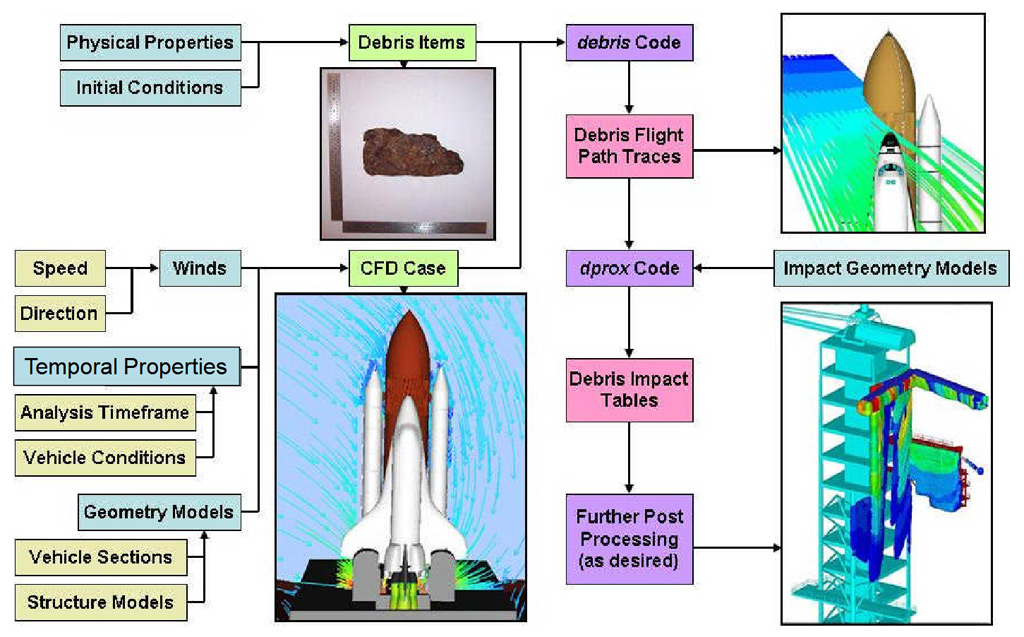
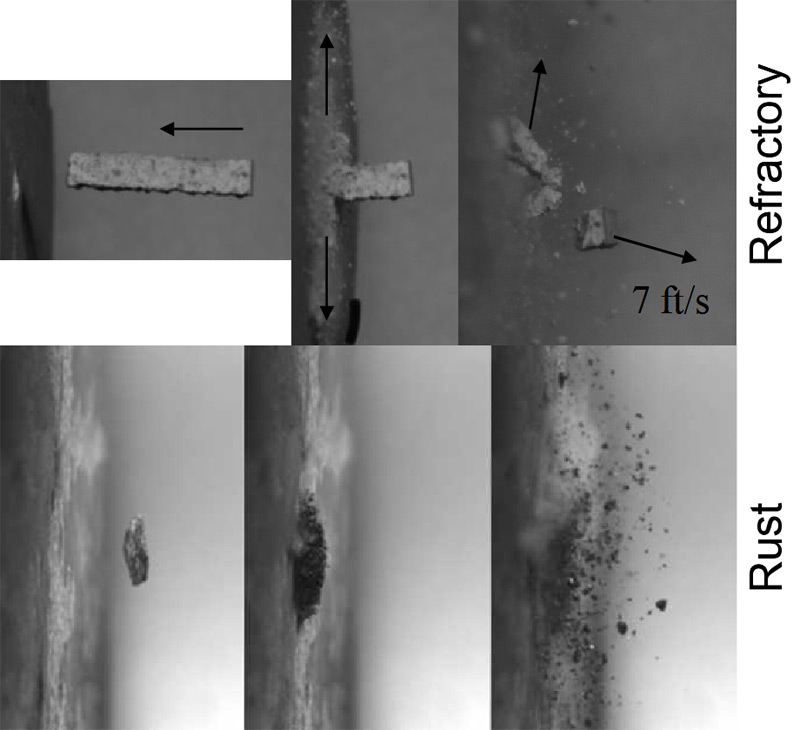
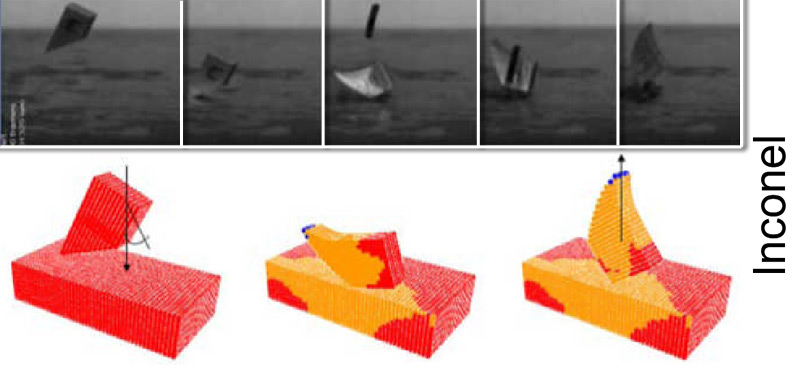
CFD simulated interaction of wind and plumes with the vehicle and launch pad structures, using both steady state and transient (moving vehicle) models. Debris Transport Analysis then took the CFD results as inputs, and used seperate software (debris/dprox) to ballistically model debris trajectories, impact locations and impact kinetics. Materials and impact tests were used in parallel to reveal the composition of debris, verify specifications, show features of impactor break-up / rebound, and demonstrate impact vulnerability of flight hardware.
The results were then provided to the project office for damage threshold specifications. Results were sorted into position bins according to element, and orbiter results were further sorted into bins according to surface material. For most of the remaining Shuttle Program operation, Liftoff Debris remained a significant risk, since catastrophic damage was possible, all elements were vulnerable to some sources, and significant uncertainties remained in characterizing the environment.
🚀 NASA, Shuttle Launches, General Environment Imagery
🕵🏻
G. C. Putnam
🛈
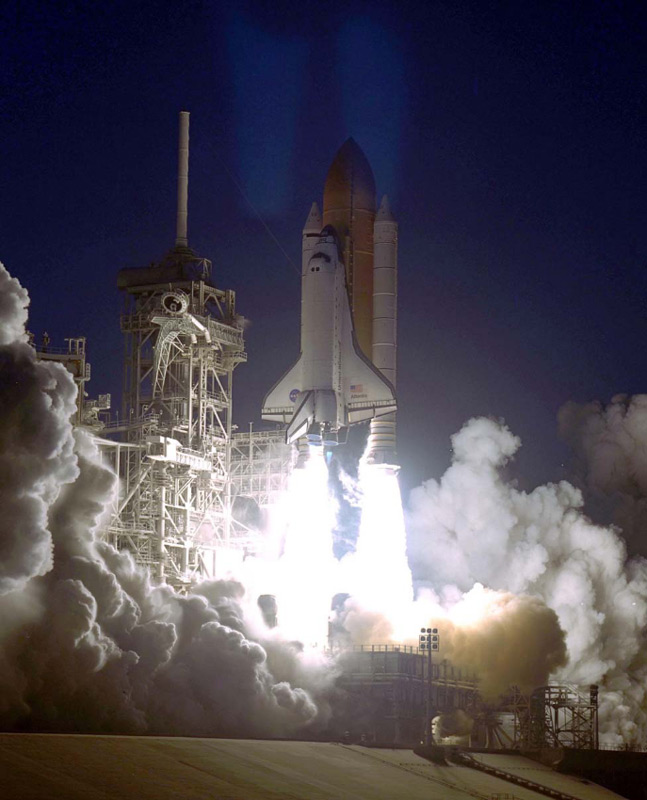
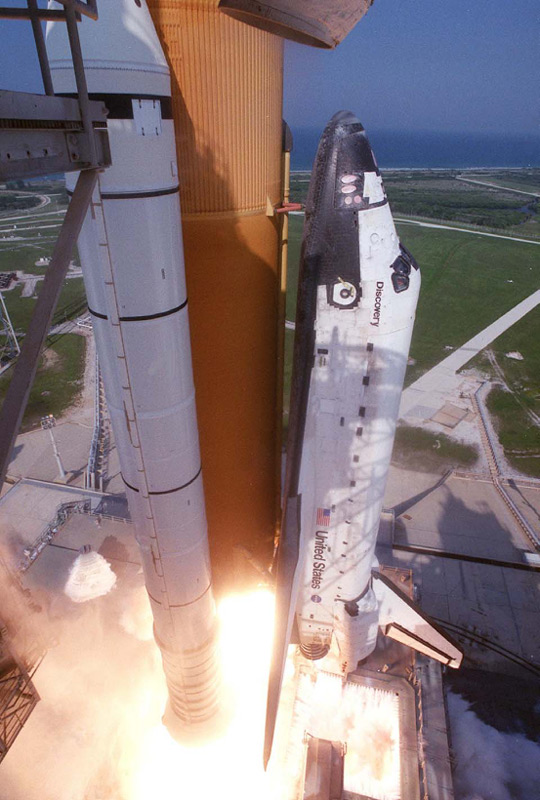
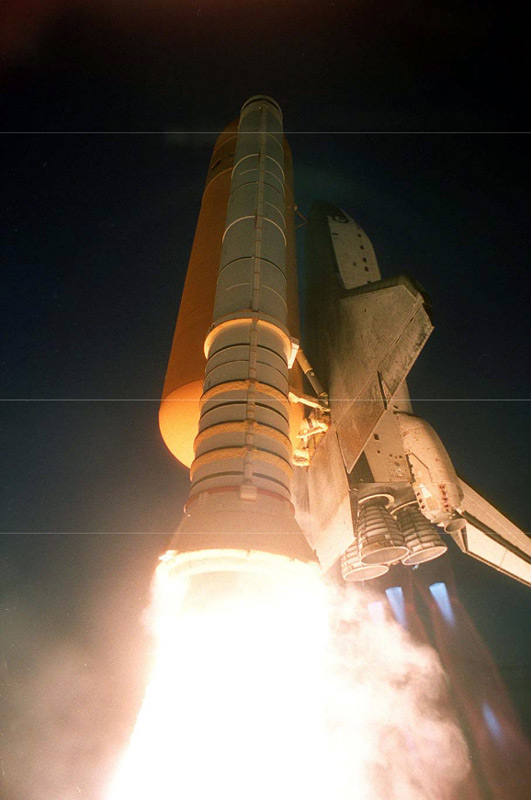
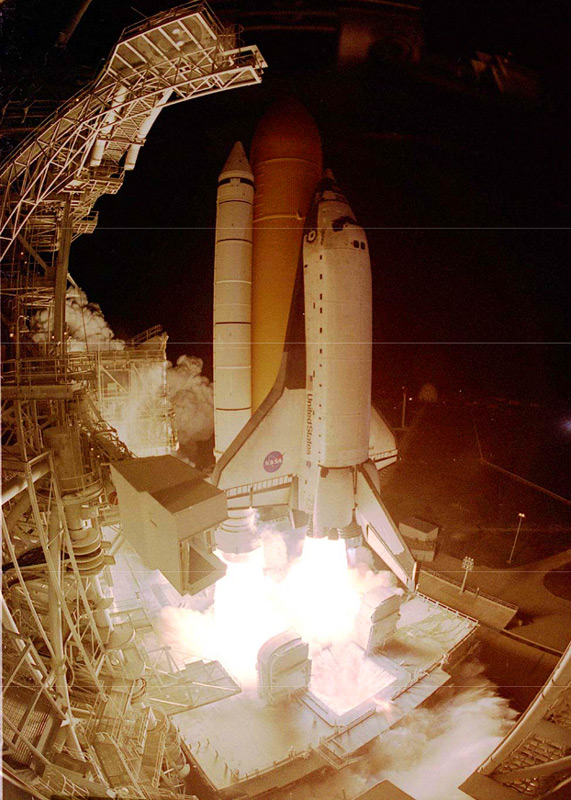
Four (4) images of Space Shuttle launches taken from the STS-98, STS-105, STS-108, and STS-109 Debris/Ice/TPS Assessment and Integrated Photographic Analysis Reports produced after each launch. Provided for orientation about the launch environment (and they're just generally pretty imagery).
Two (2) images of ice formation taken from the STS-98 and STS-108 debris and photo reports. Examples of somewhat common ice formation issues that needed to be watched prior-to and during launch for possible vehicle impact.
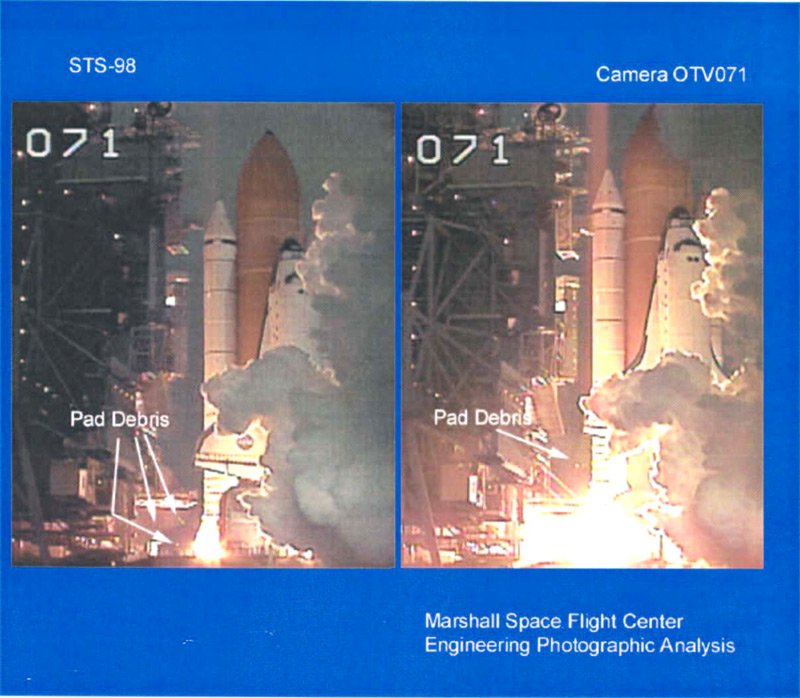
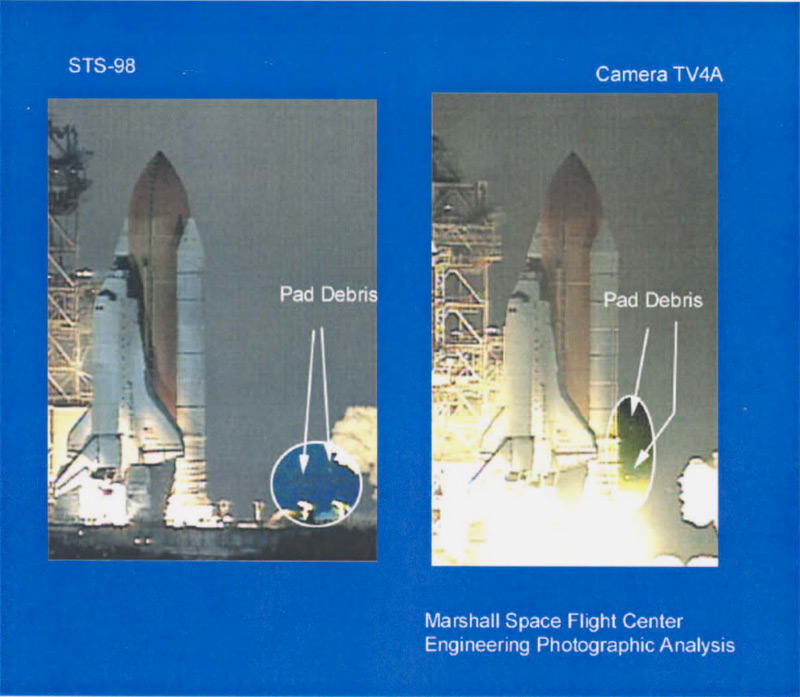
Three (3) images of farfield pad debris taken from the STS-98 and STS-109 debris and photo reports. Examples of somewhat common debris being ejected from the launch pad vicinity, usually moving away from the vehicle in the farfield. Some appeared near enough that multiple camera view checks were necessary to verify a lack of impact and risk to the vehicle.
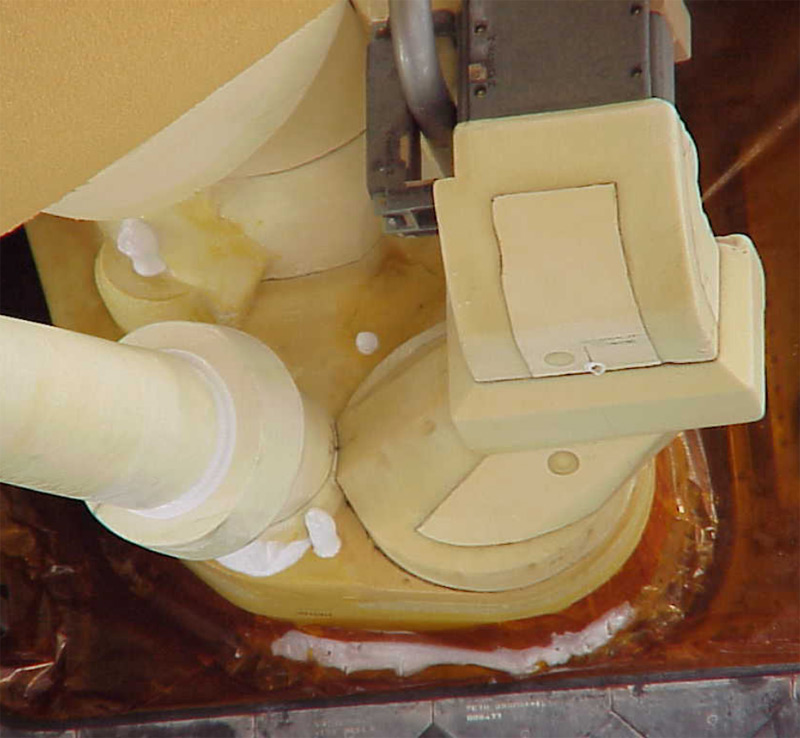
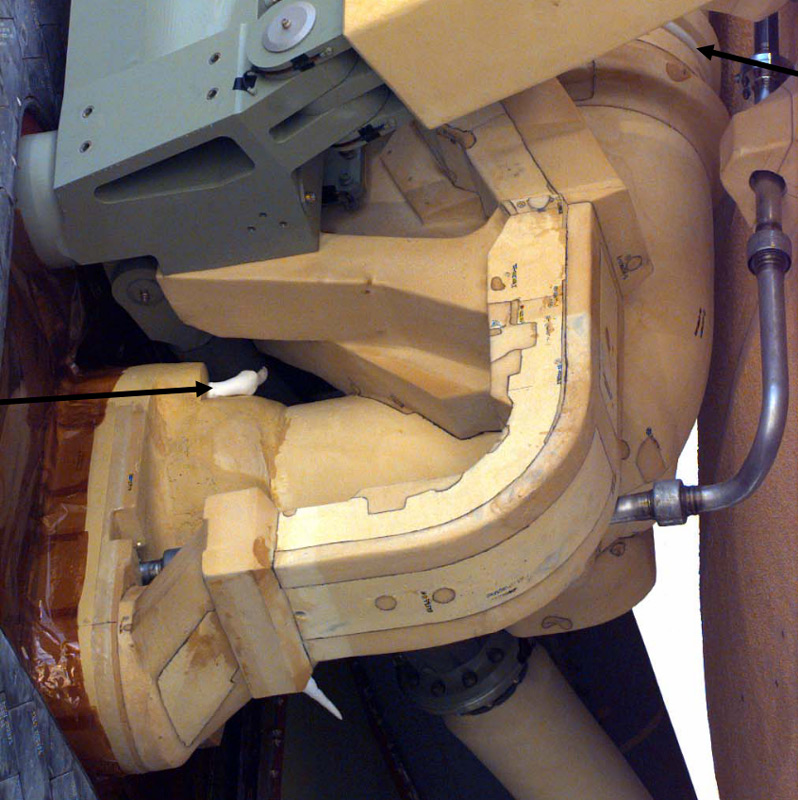
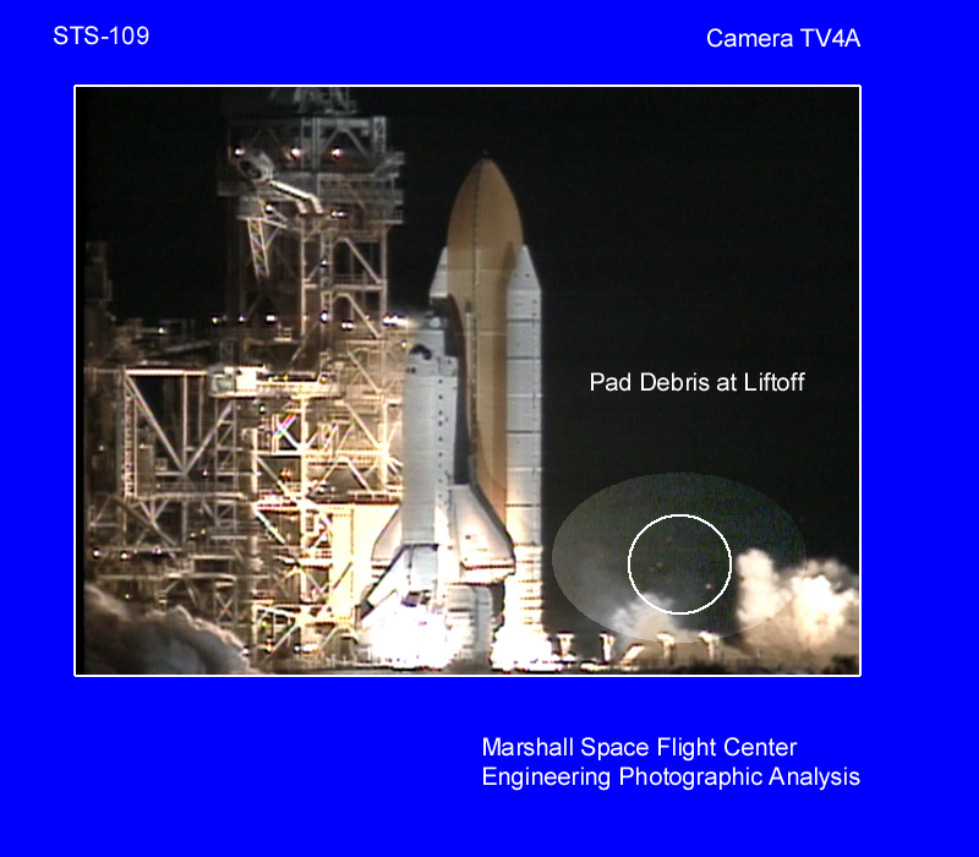
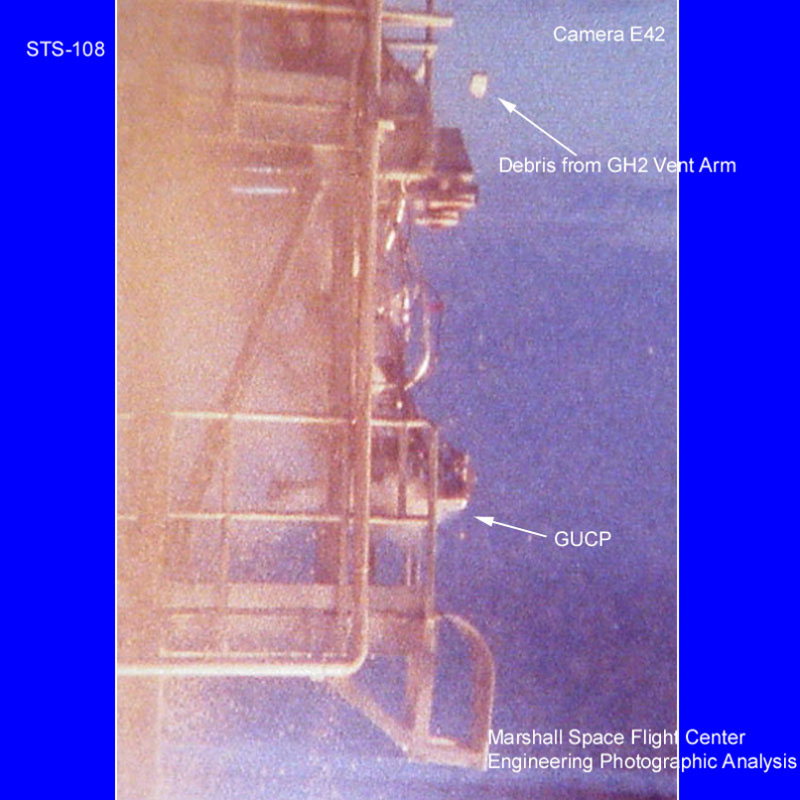
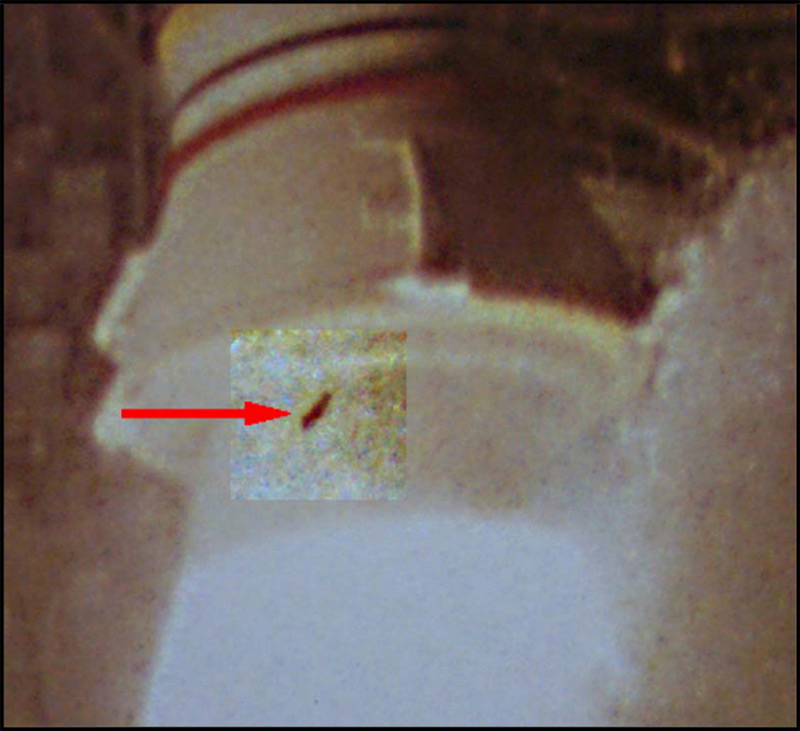
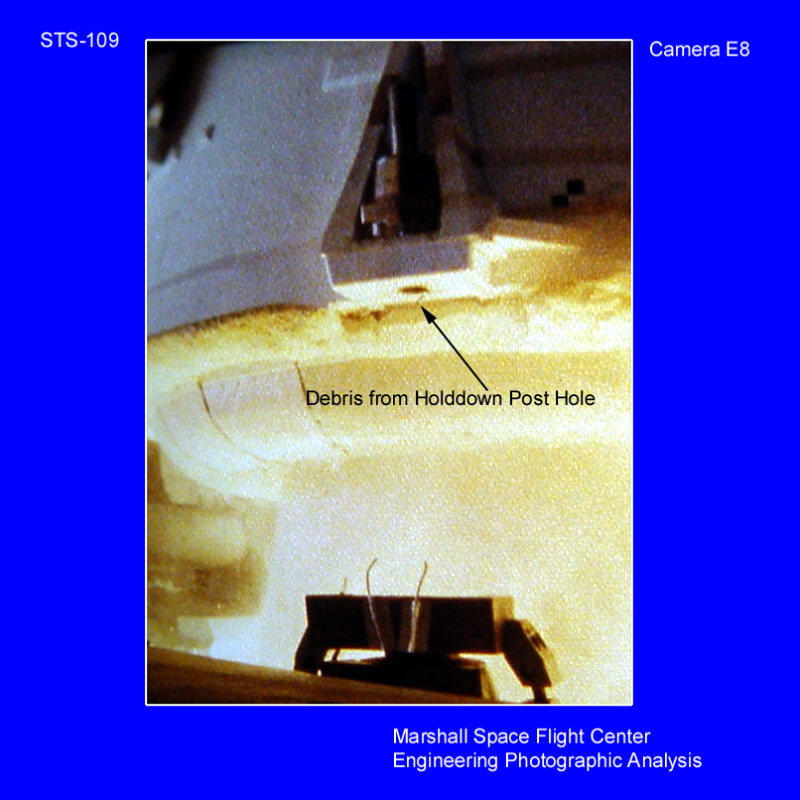
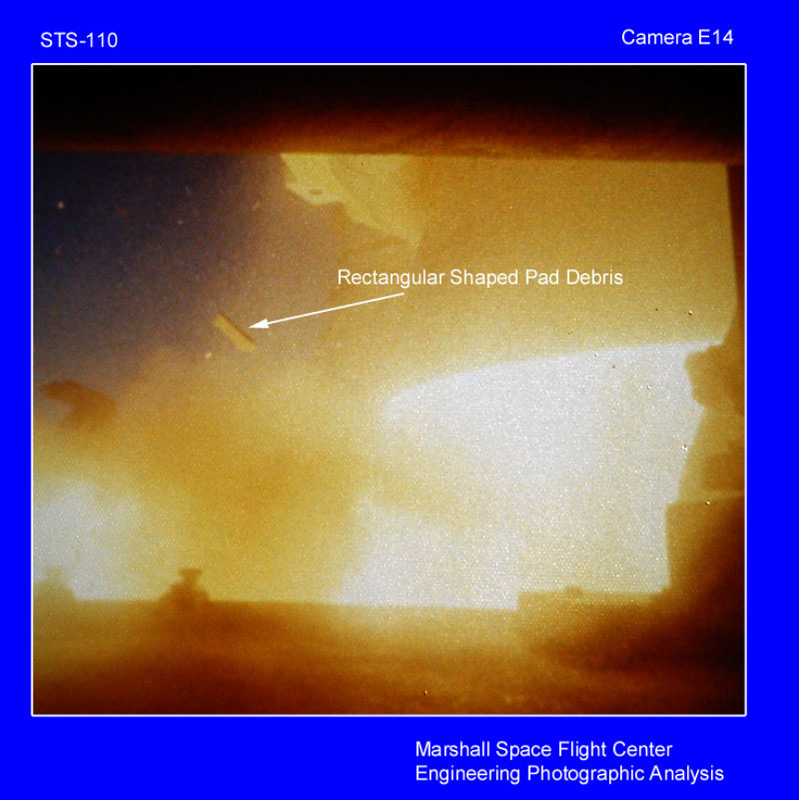
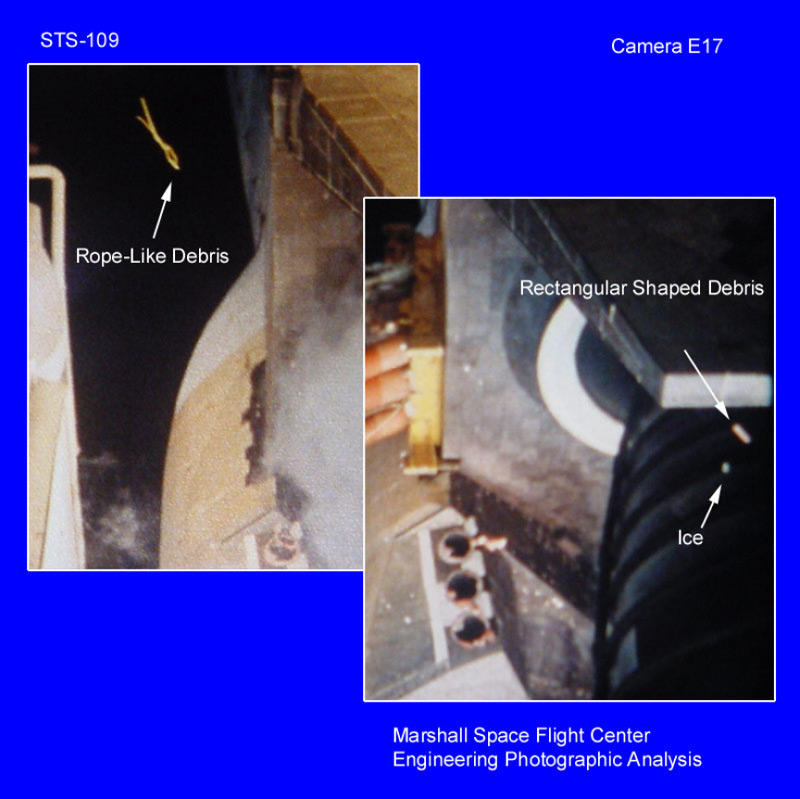
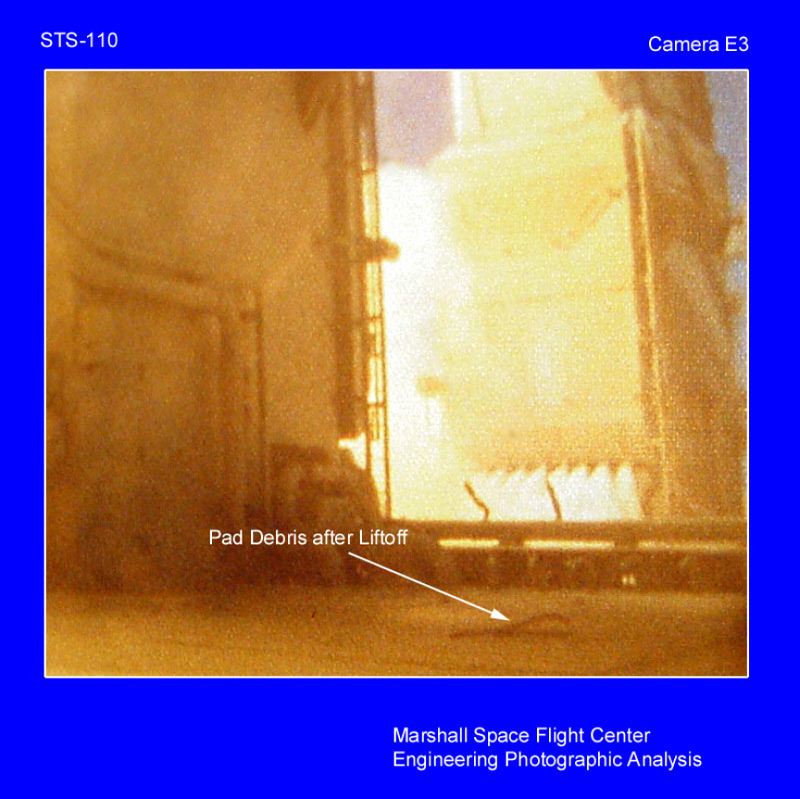
Seven (7) images of nearfield pad debris taken from the STS-108, STS-109, and STS-110 debris and photo reports. Examples of the variety of debris that might appear near the vehicle. The first shows a failure in the GH2 vent line, that then caused debris releases after the vehicle had cleared the area. The next three show debris near the Solid Rocket Boosters (SRBs), sometimes emerging from the hardware itself, and other times being propelled by the plume flow. The final three show objects that were left on the pad, or liberated during launch, and then became debris risks (rope in both cases).
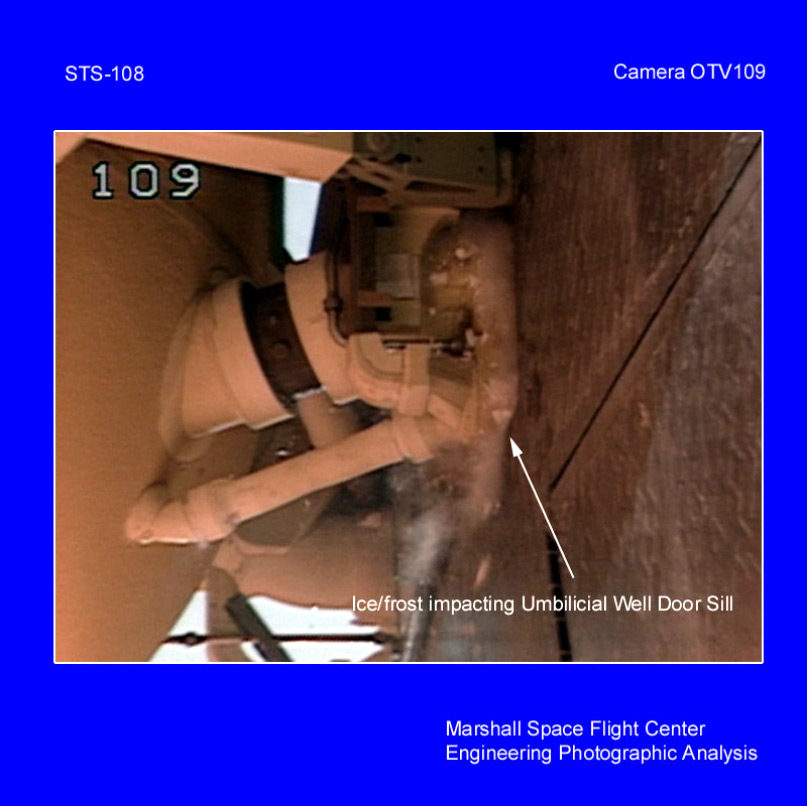
An image of a debris impact taken from the STS-108 debris and photo report. A somewhat rare example of a direct debris impact observation, with ice or frost observed impacting the umbilical well door of the vehicle.
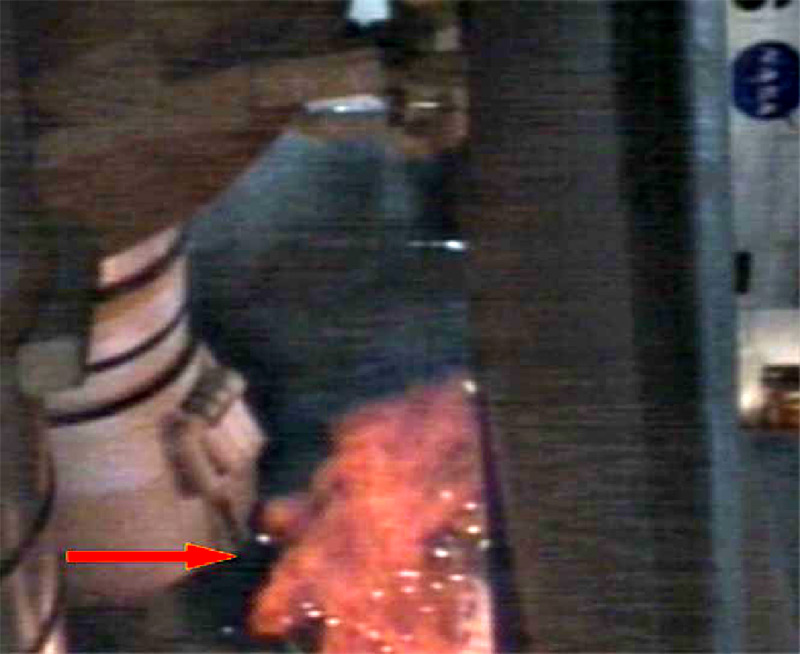
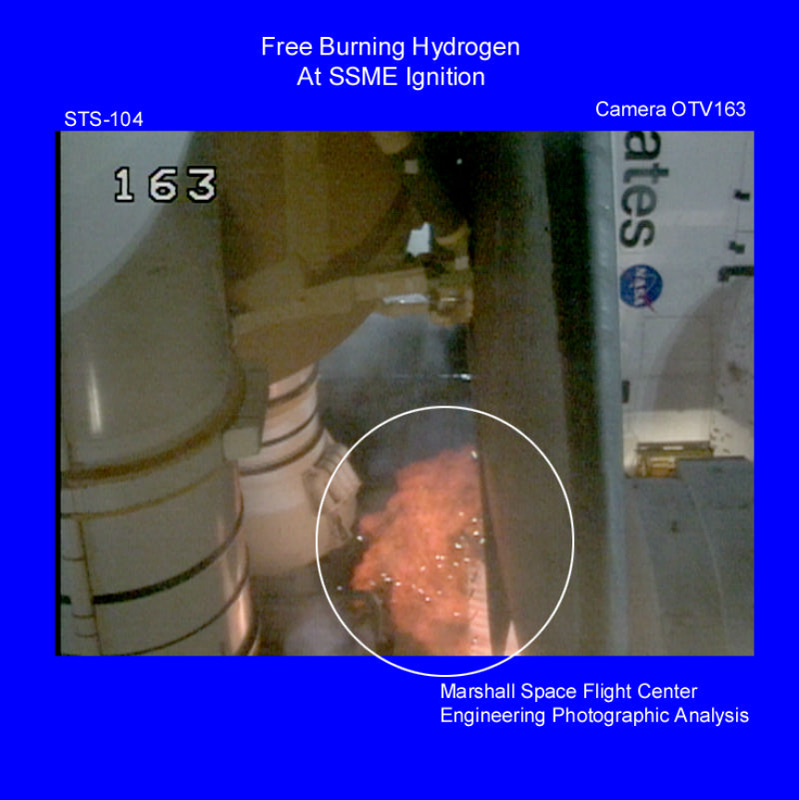
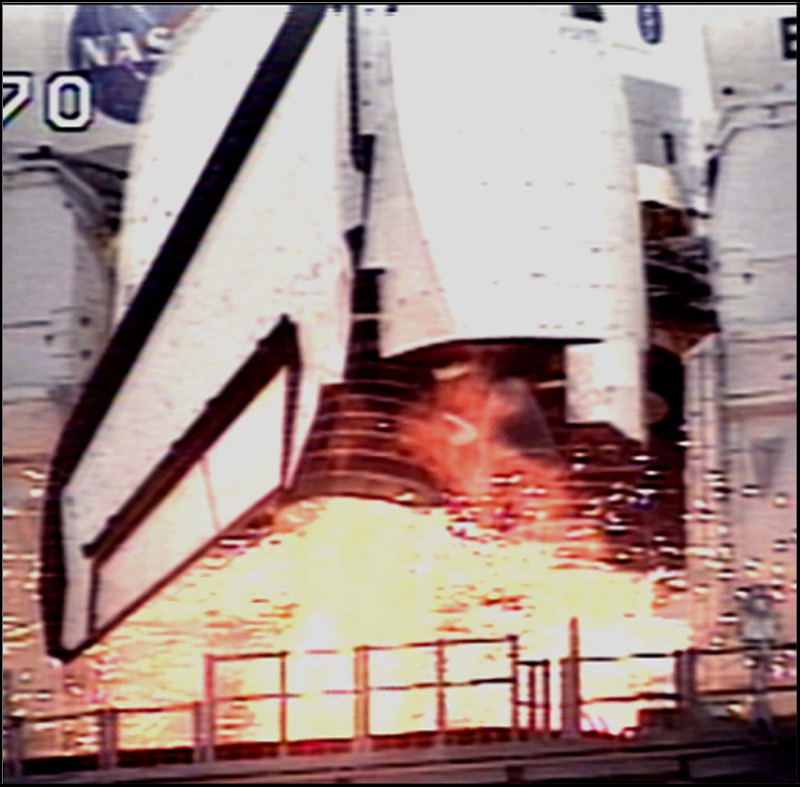
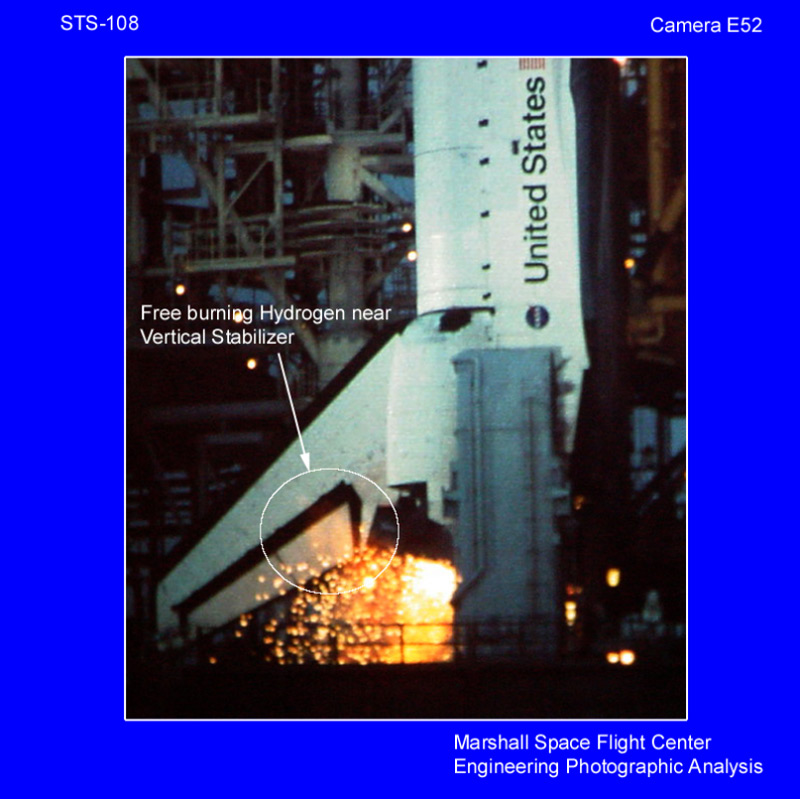
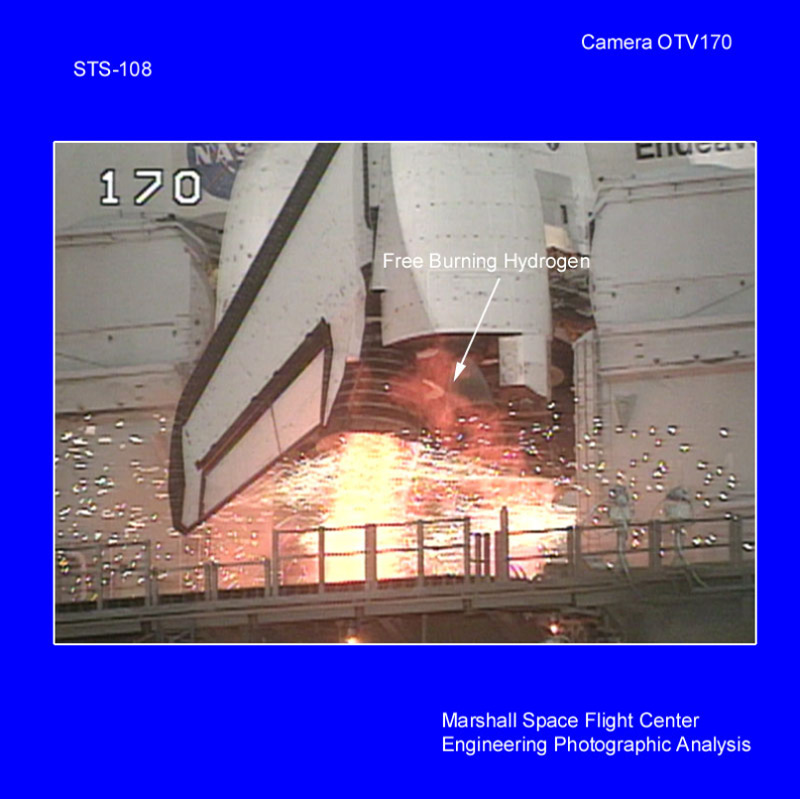
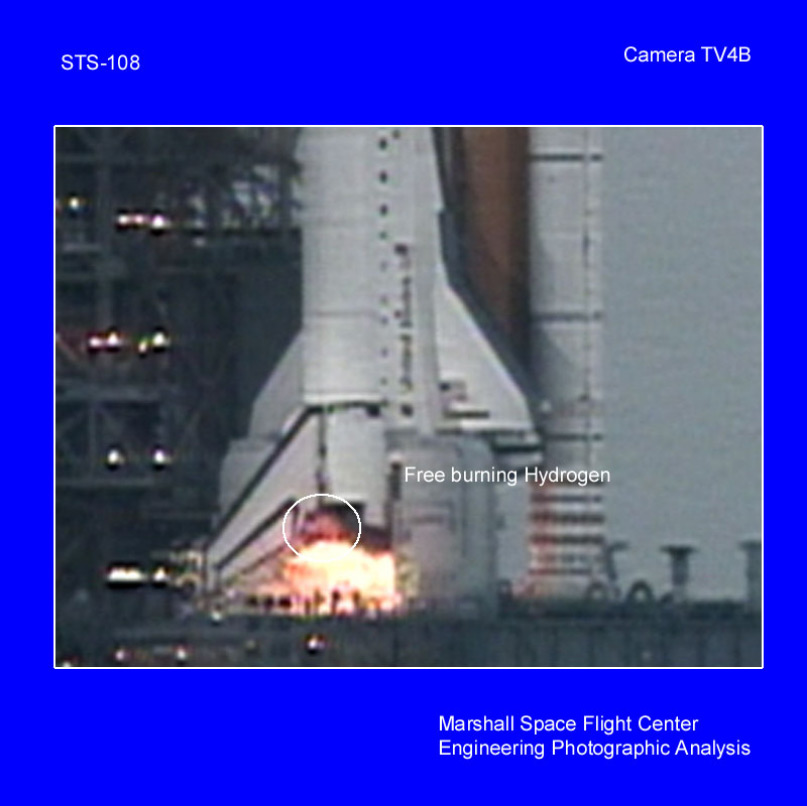
Six (6) images of free burning hydrogen taken from STS-104 and STS-108 debris and photo reports. Hydrogen collecting and burning in open air was observed on several launches and was viewed as a possible risk for explosion or detonation depending on the concentration. In a nominal launch there should have been very little excess hydrogen released.
🚀 NASA, Shuttle Launches, Post-Launch Walkdown and Debris Issues
🕵🏻
G. C. Putnam
🛈
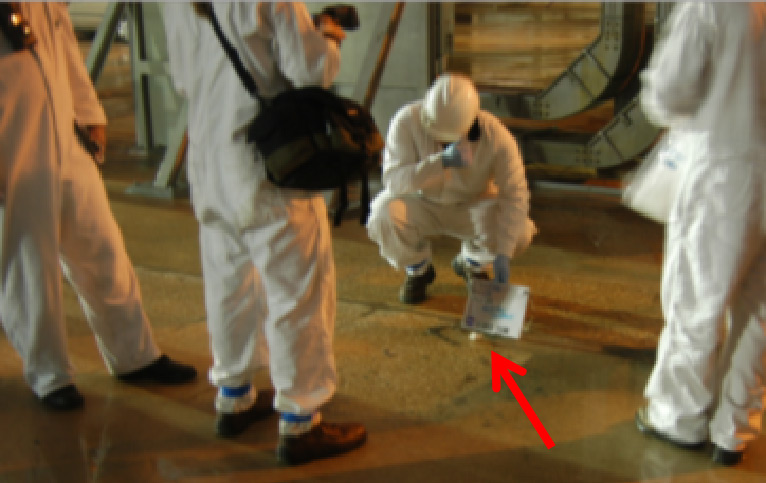
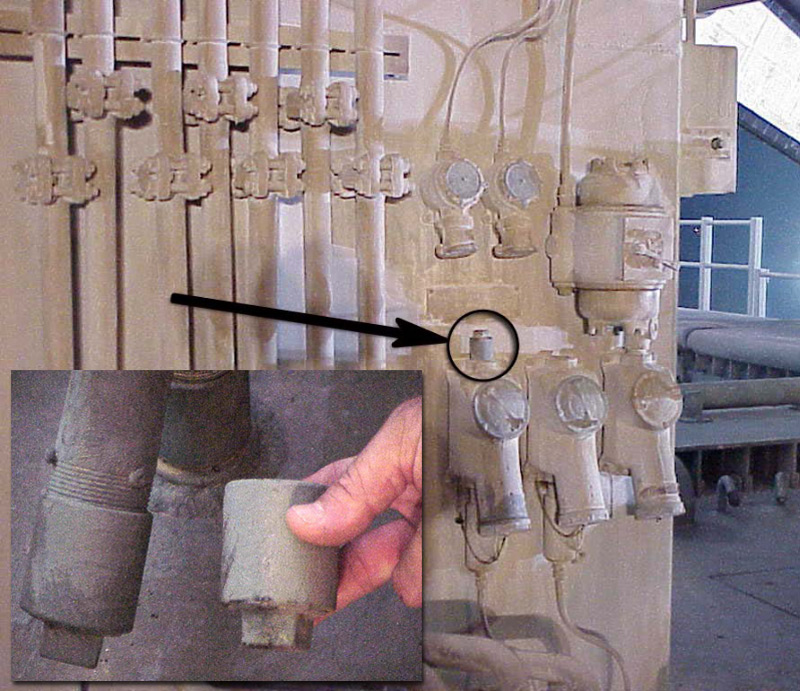
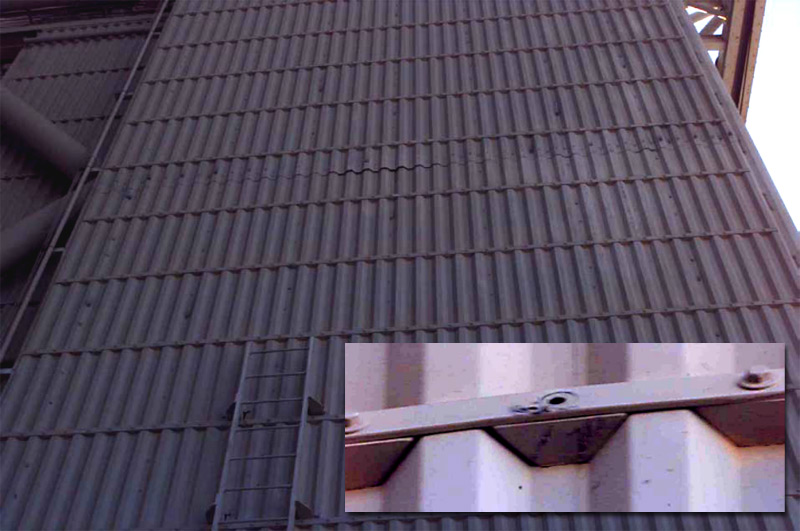
Three (3) images of the post-launch walkdown and debris found after launch from STS-104 and STS-105 debris and photo reports. After launch, the post-launch team would go out to the pad and document the launch pad state and any debris issues found. Two examples of items found include a pipe end cap that came loose and a wall fastener that broke off (from among hundreds).
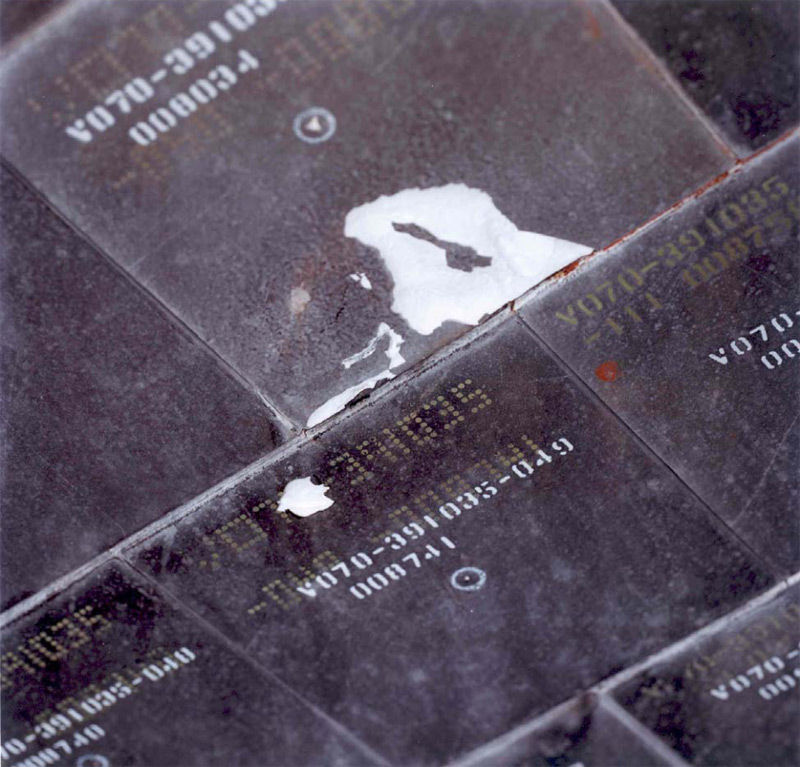
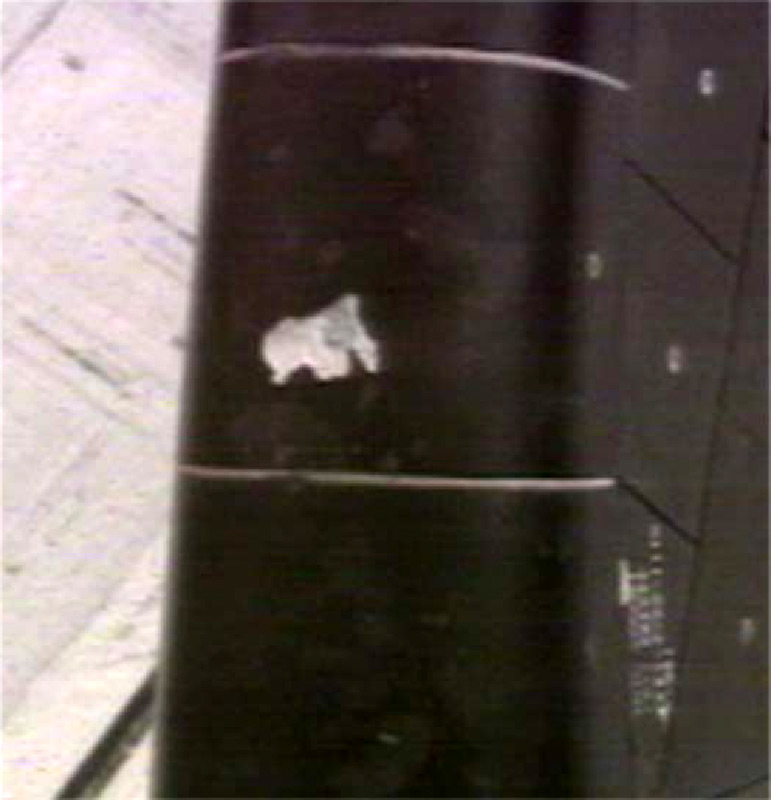
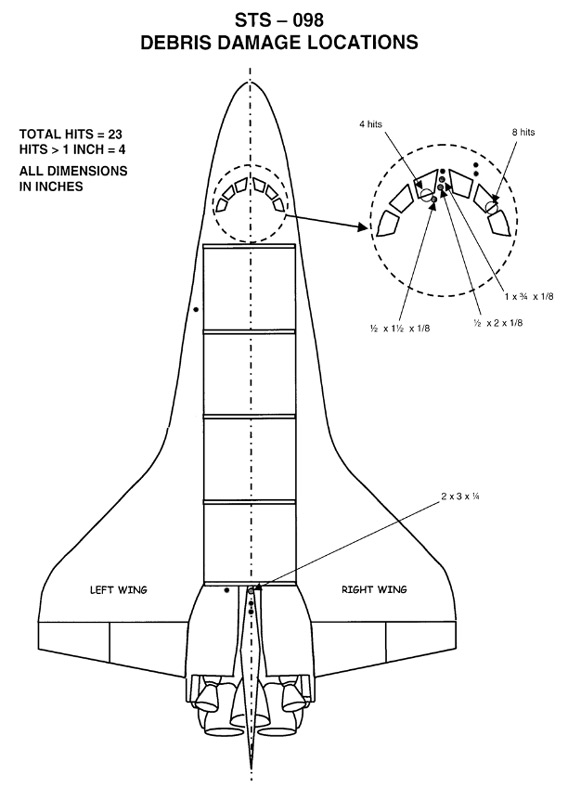
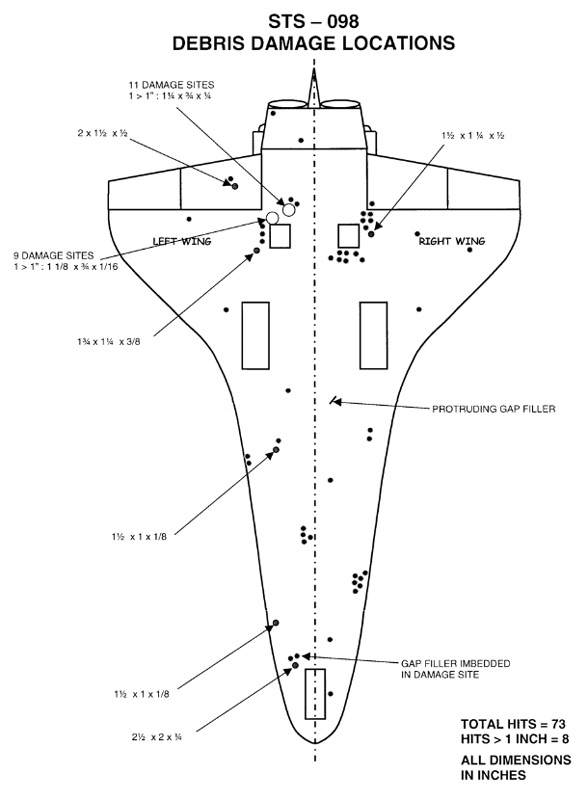
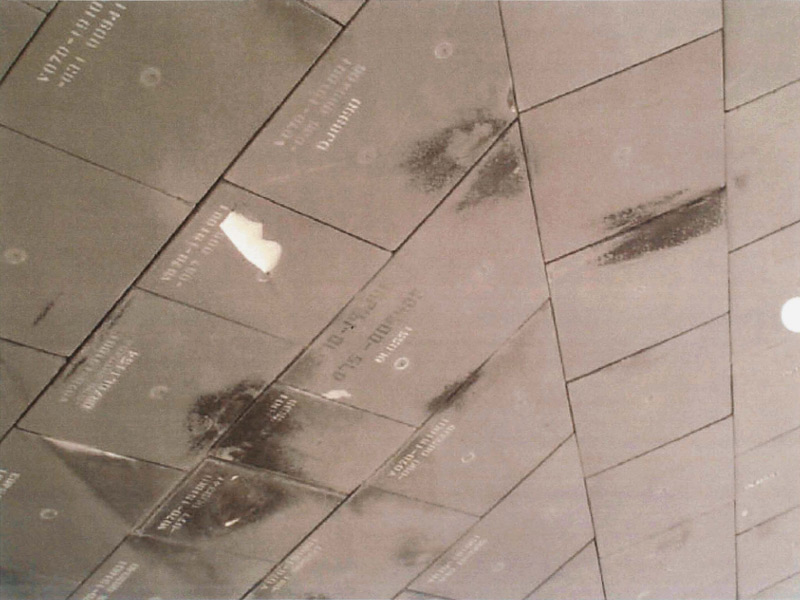
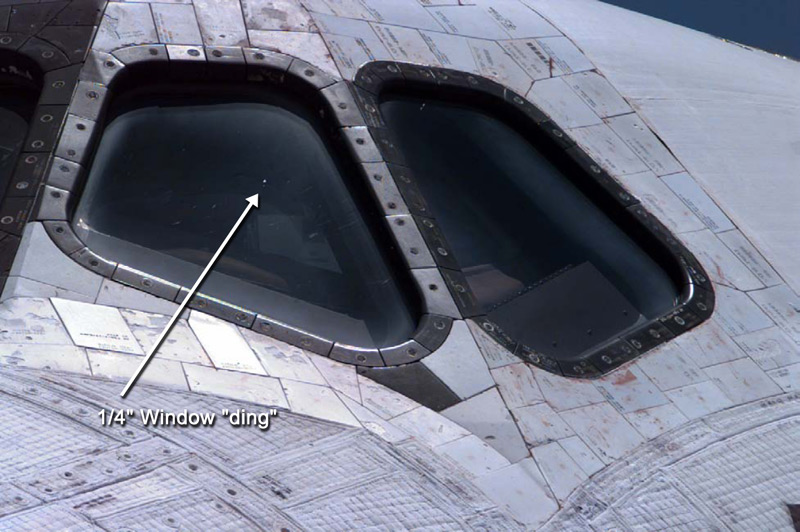
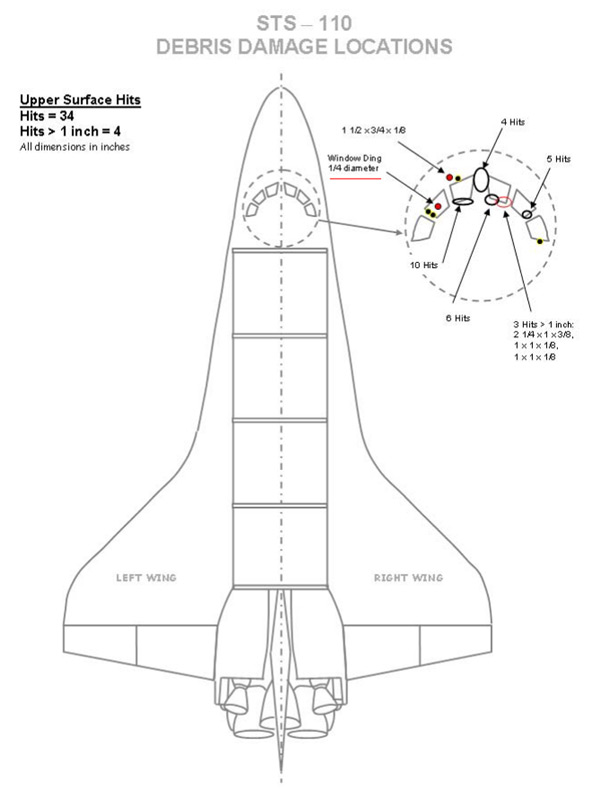
Seven (7) images of damage locations found on the vehicle and damage maps from STS-98, STS-100, and STS-110 debris and photo reports. On orbit, the vehicle would be imaged over the surface to document damage sites, and record imagery of any serious issues. Maps of the damage locations were then prepared along with statistics of the total number of hits, impact trends, and long form discussions for any anomalous events.
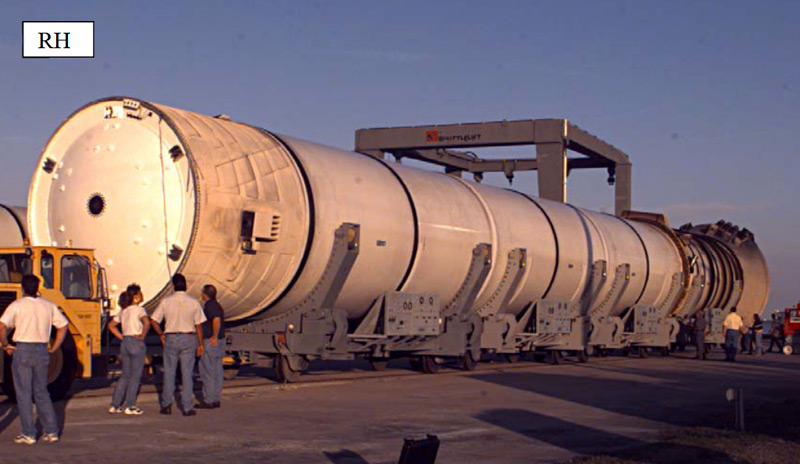
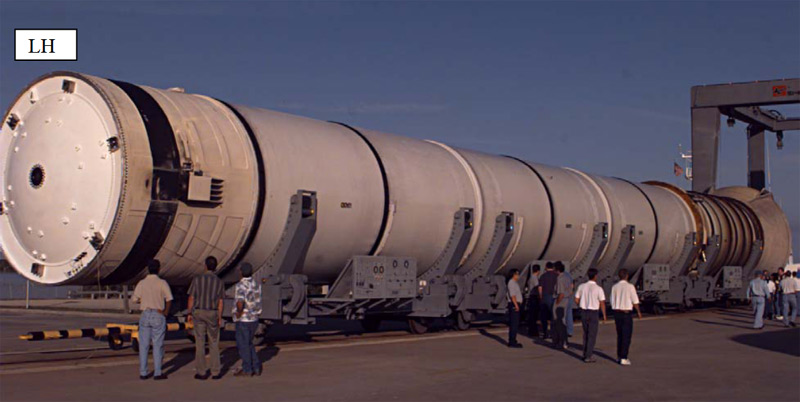
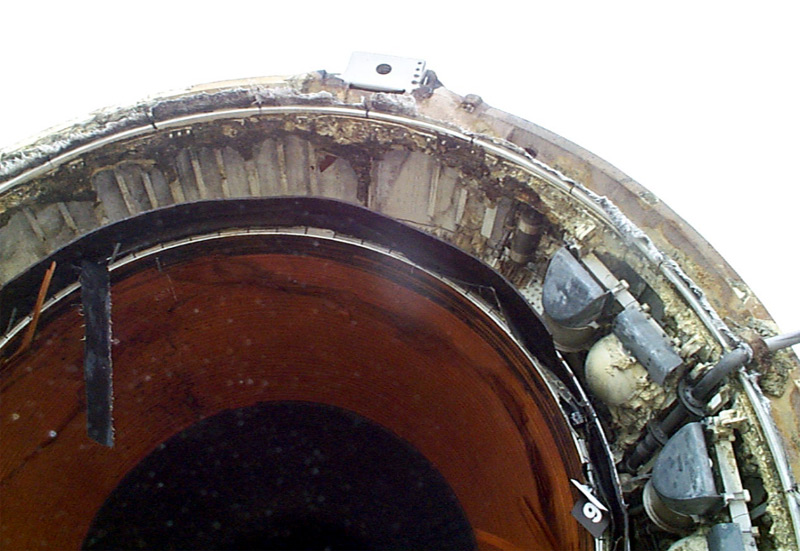
Three (3) images of post-retrieval condition of the SRBs from STS-98 and STS-110 debris and photo reports. After launch, and seperation from the vehicle, the Solid Rocket Boosters (SRBs) would parachute into the ocean, and then be retrieved by boats and brought back to the military base near Kennedy Space Center, where they would be evaluated for their condition and any anomalous issues.
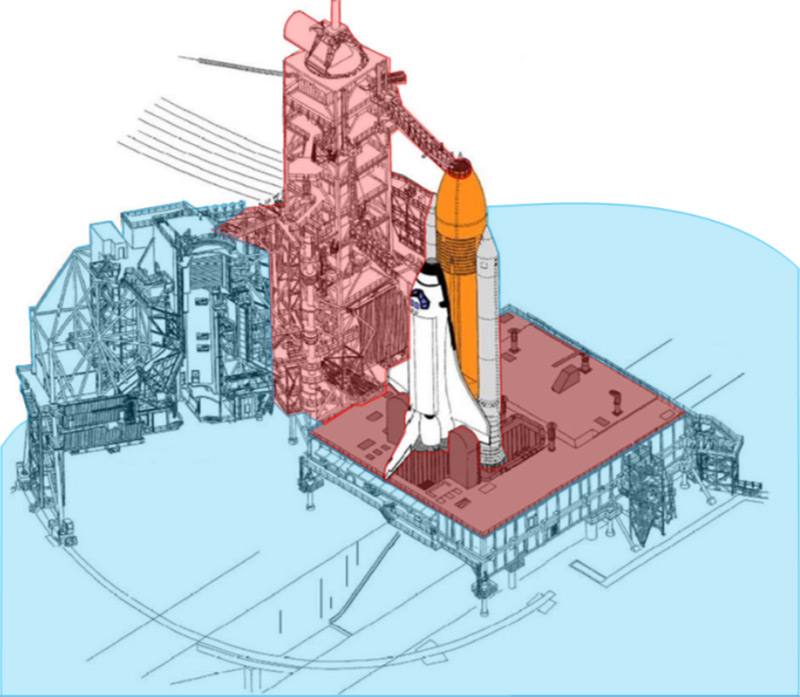
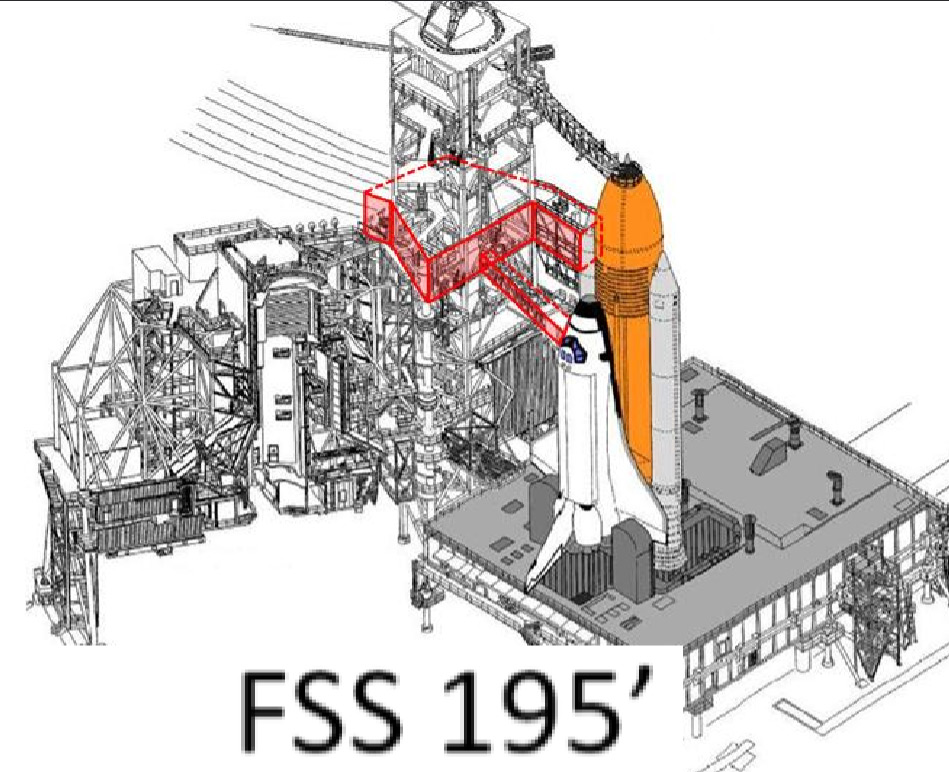
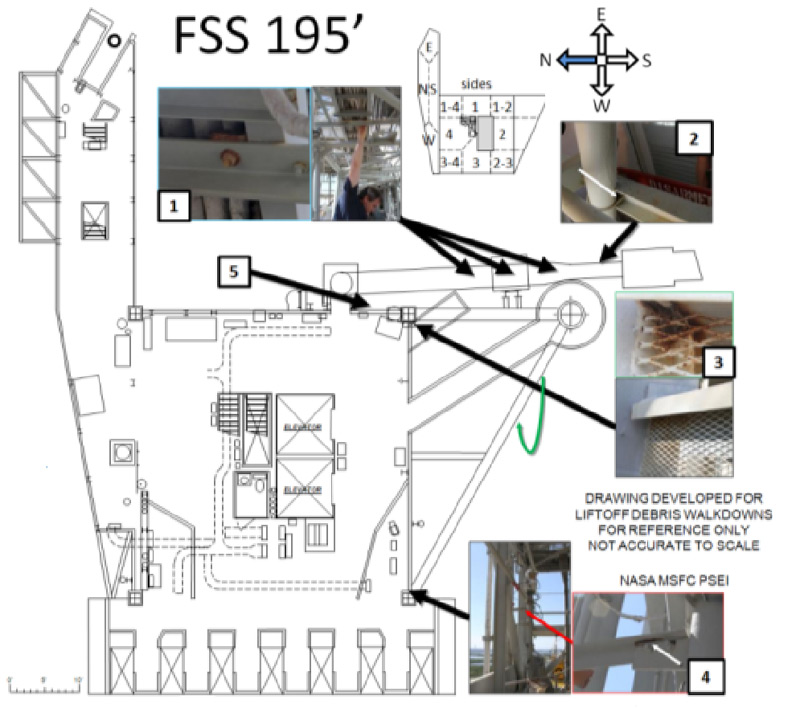
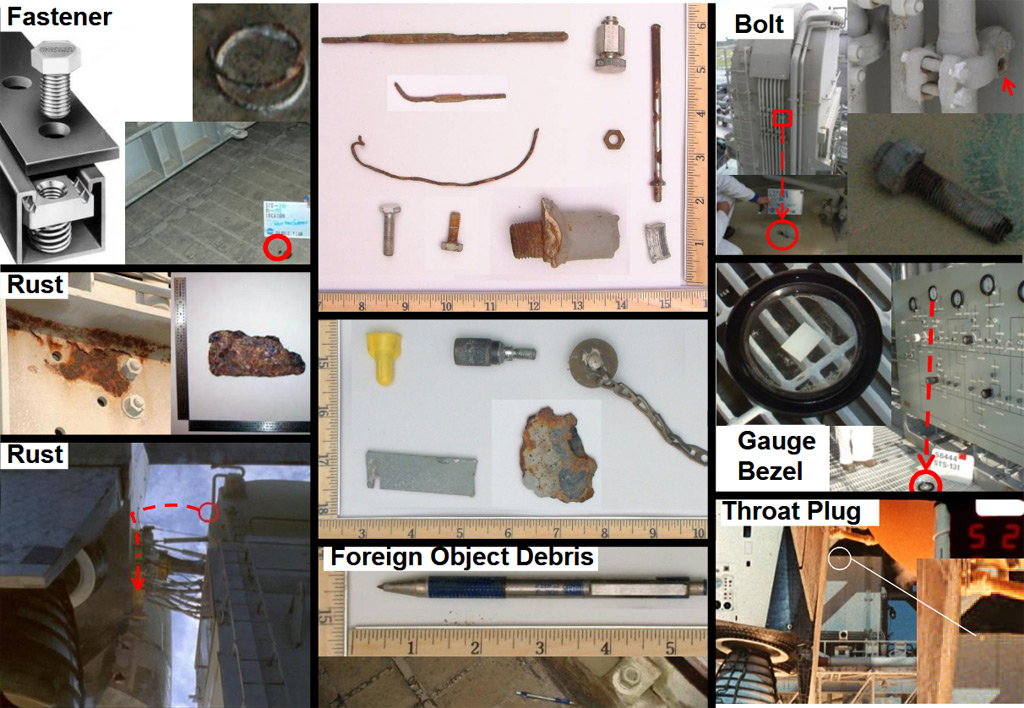
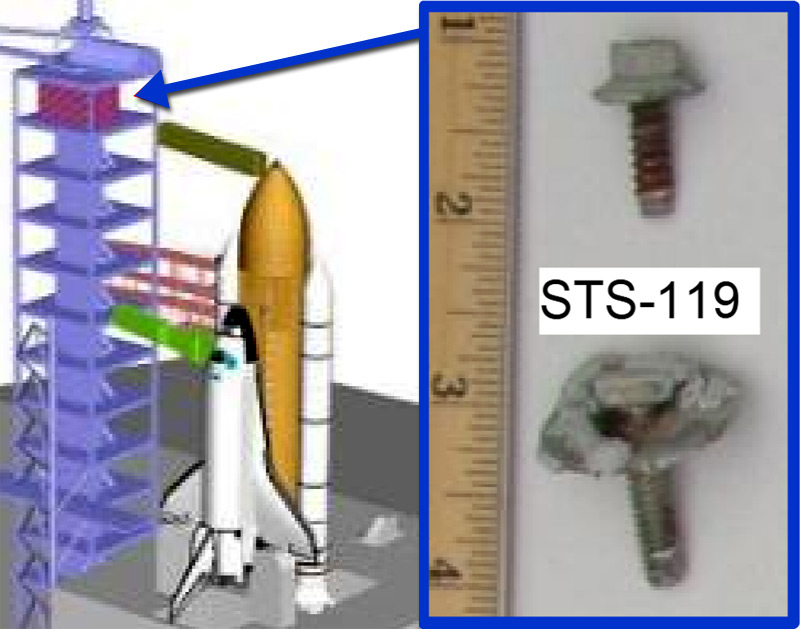
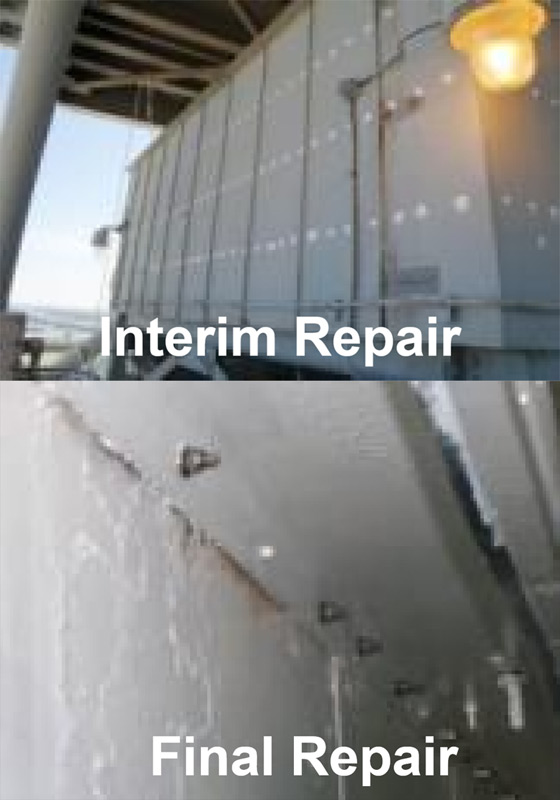
Seven (7) images providing an orientation to the launch pad environment, the critical debris zones, floors of specific interest because of debris issues and hardware, examples of debris items recorded over the flights, and the repair resolution of a specific bolt example identified as a trend in STS-119.
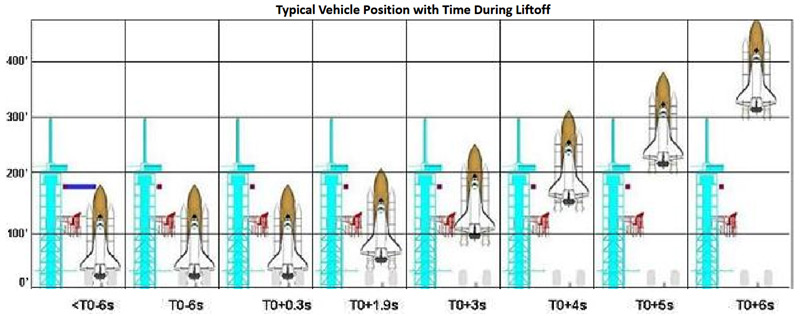
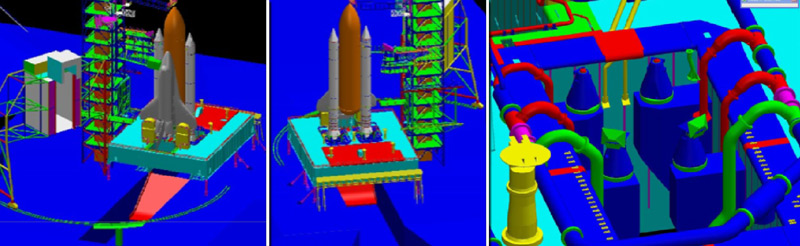
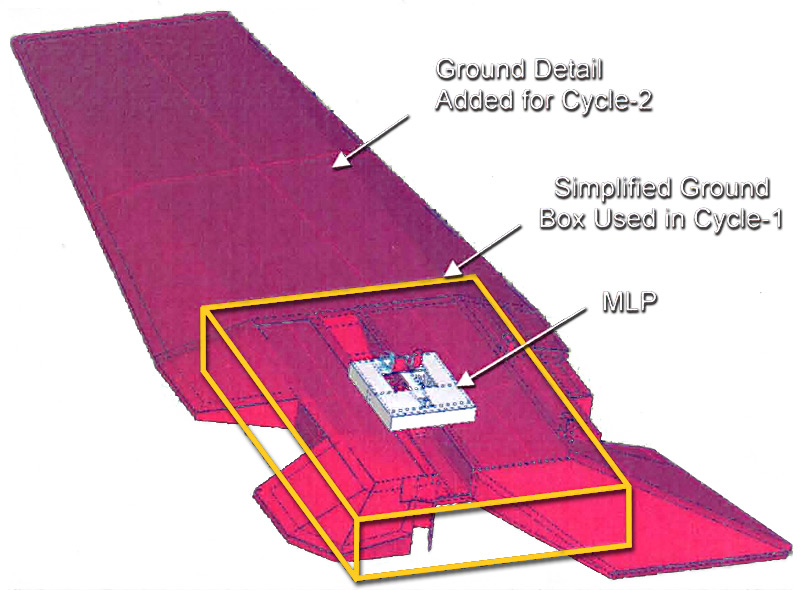
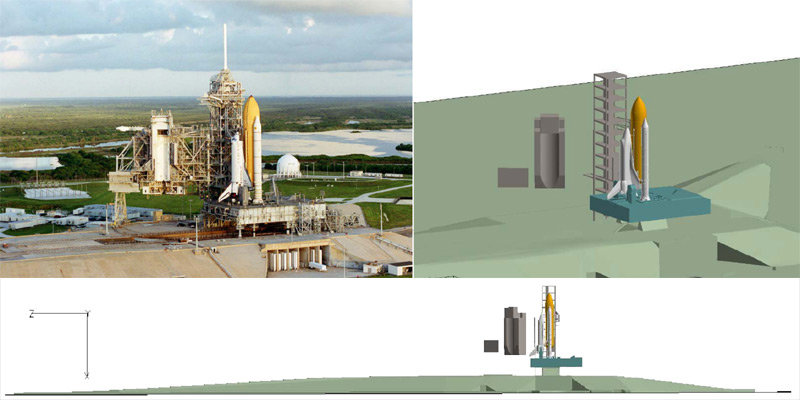
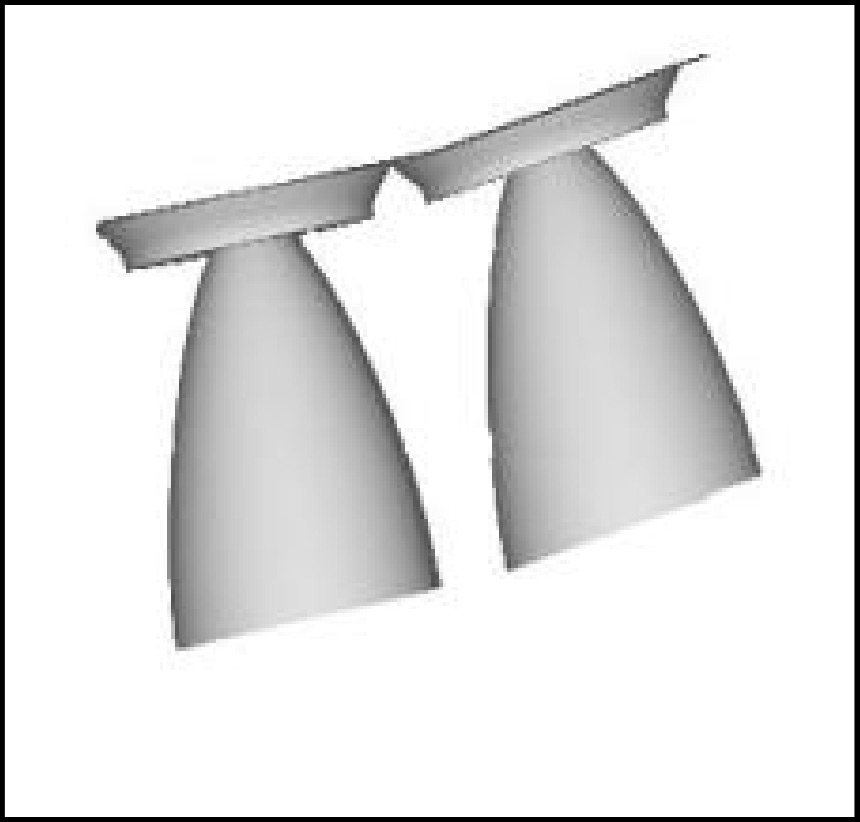
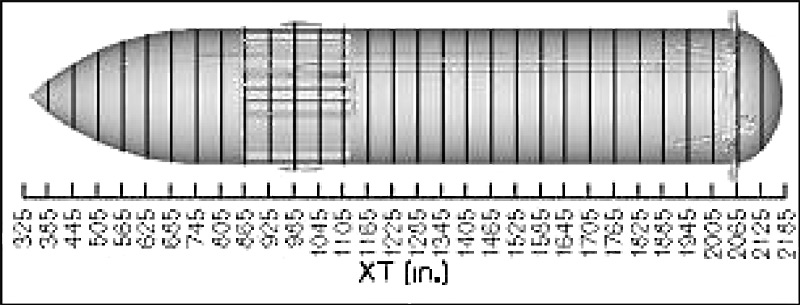
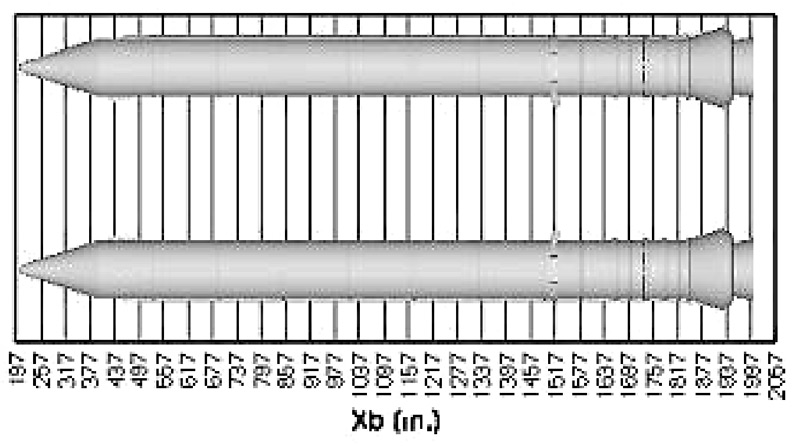
Five (5) images showing the process used for computationally examining debris risk, the typical locations of the Shuttle in flight (and calculation cases used) for analysing risk, the CAD models available of the launch pad, the resulting CFD meshes produced, and a comparison of those models to the actual vehicle on the launch pad.
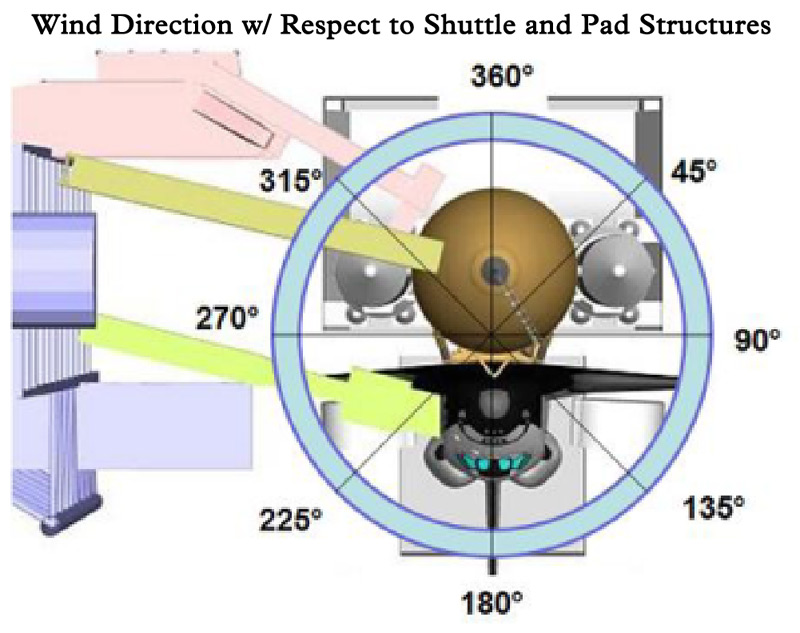
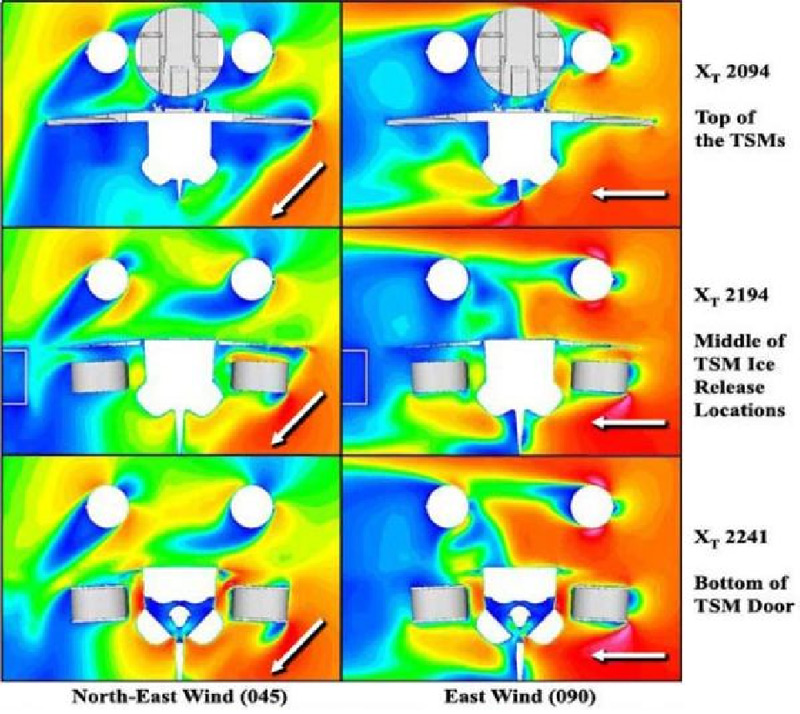
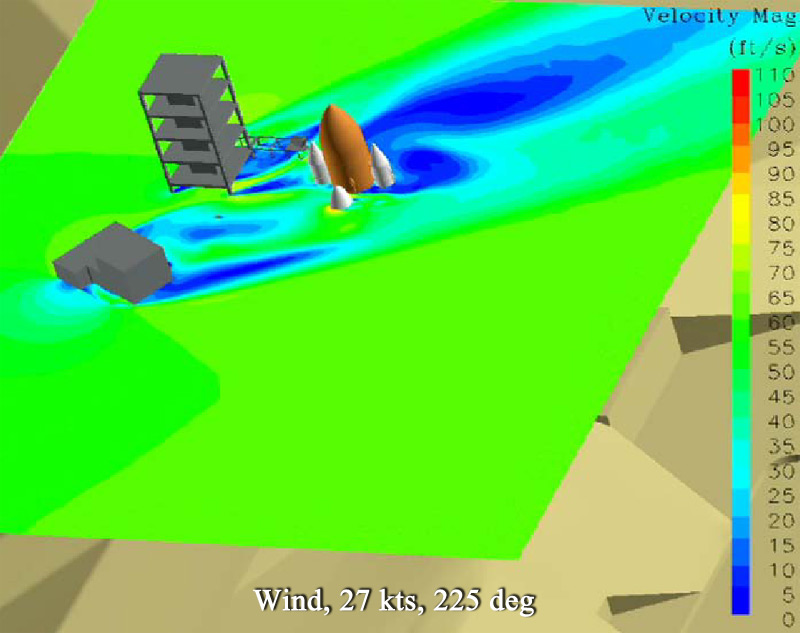
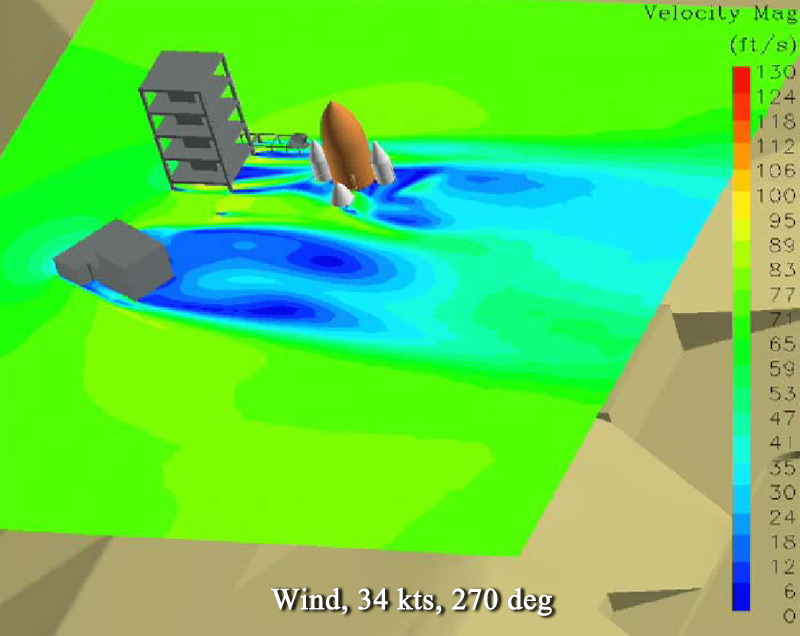
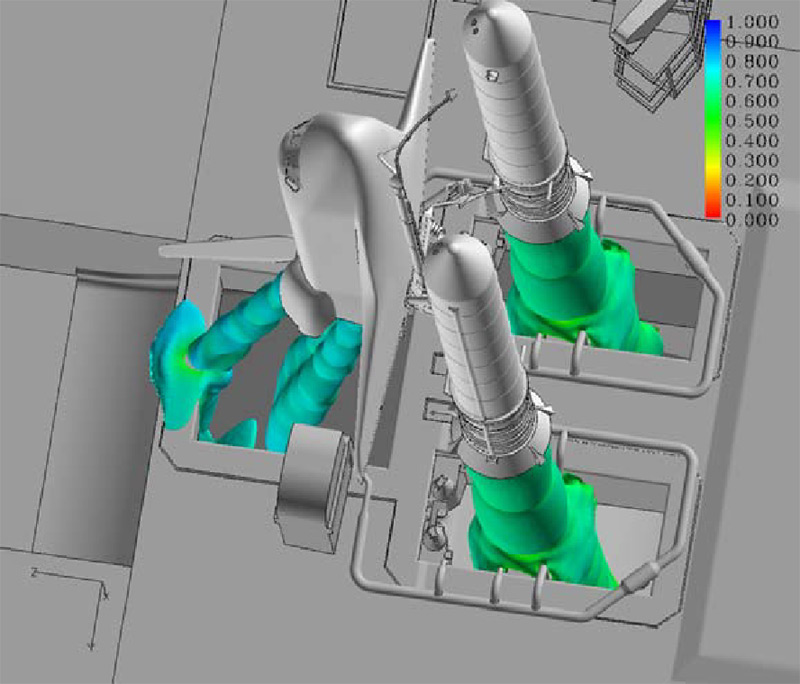
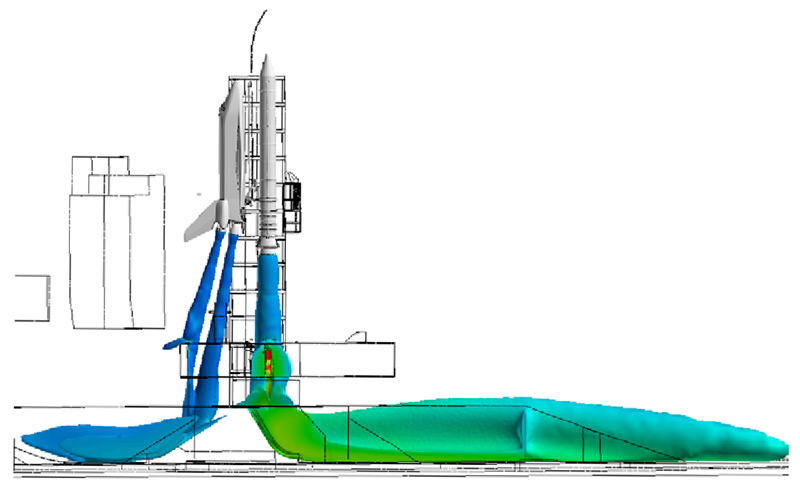
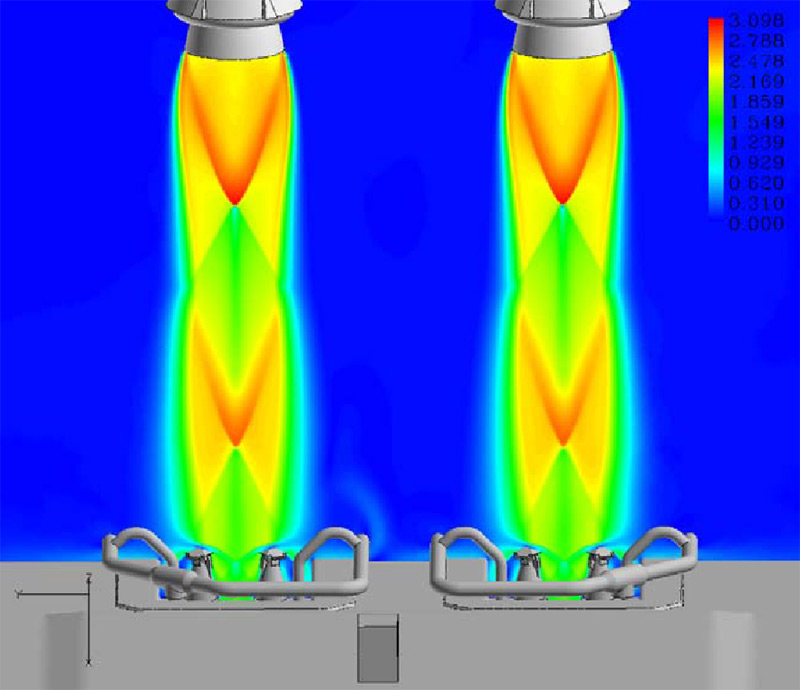
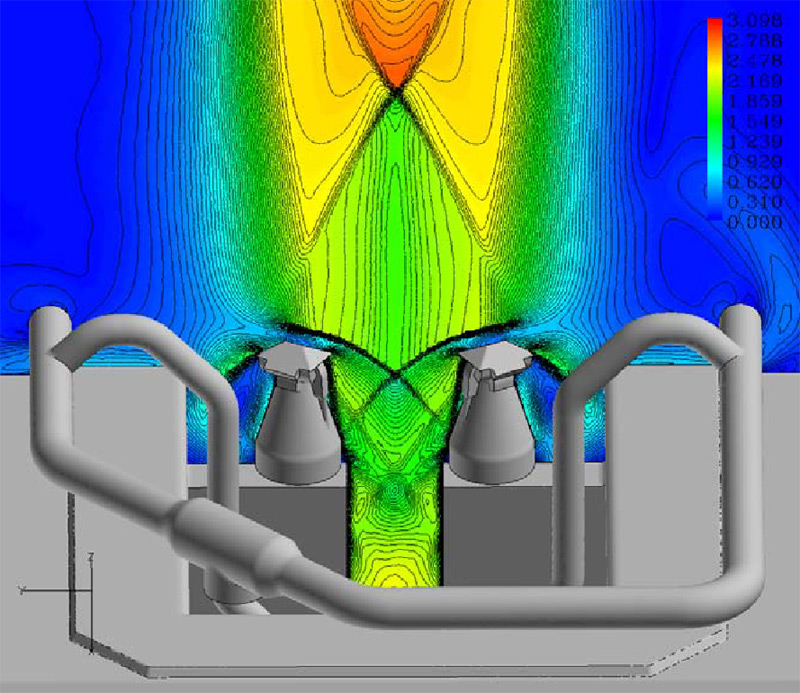
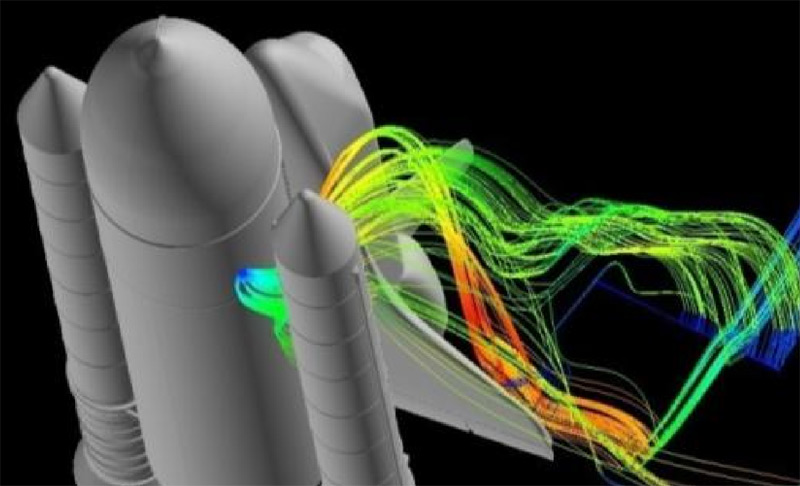
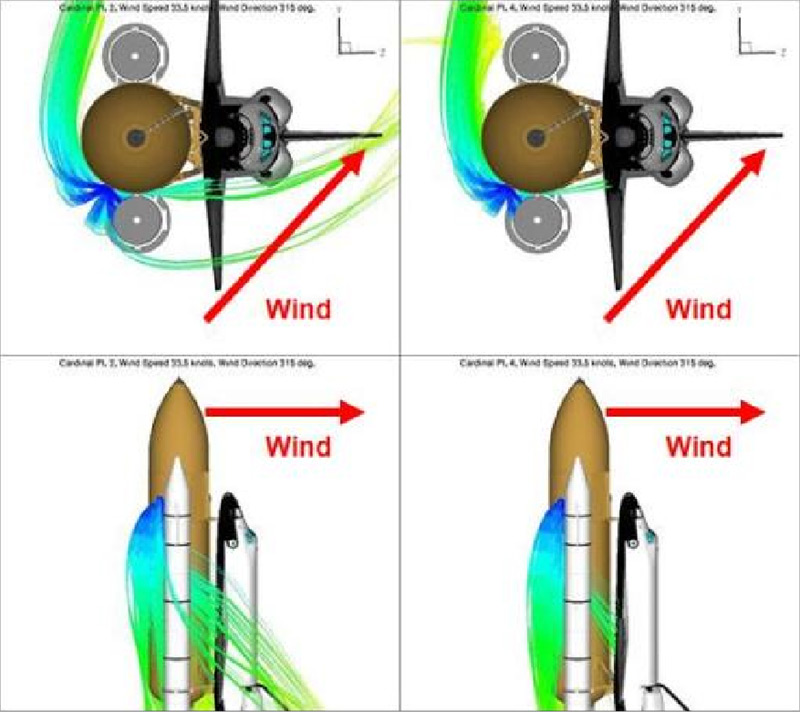
Nine (9) images illustrating the CFD results and calculations used for liftoff debris, with an orientation to the launch pad winds, several results used for wind blown debris calculations, results showing the plumes calculated mid launch impacting the pad, and two cross sectional views of the Mach 3 plumes and the shock effect interactions for the SRBs that had to be handled.
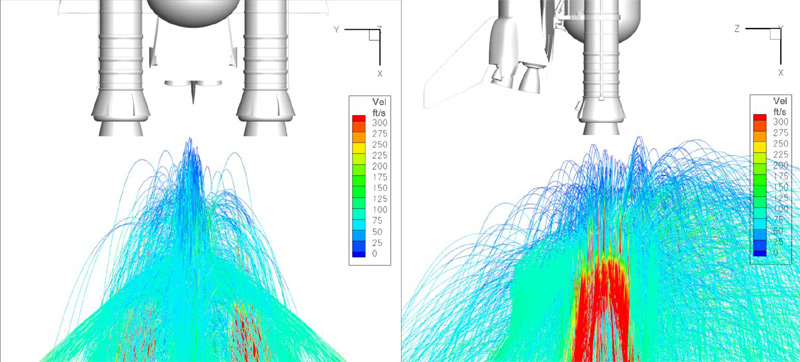
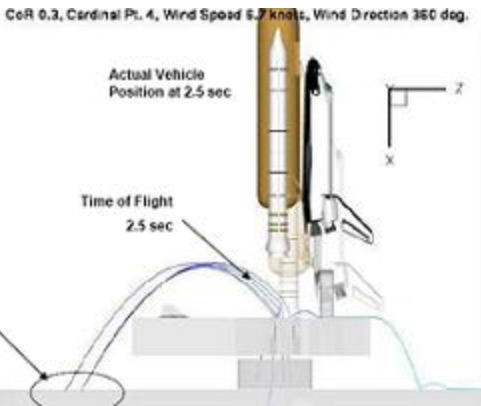
Four (4) images showing debris transport and the path traces used for evaluating impact risk when released, along with an example of a specific risk identified due to deck recirculation in CFD, and the debris transport calculated.
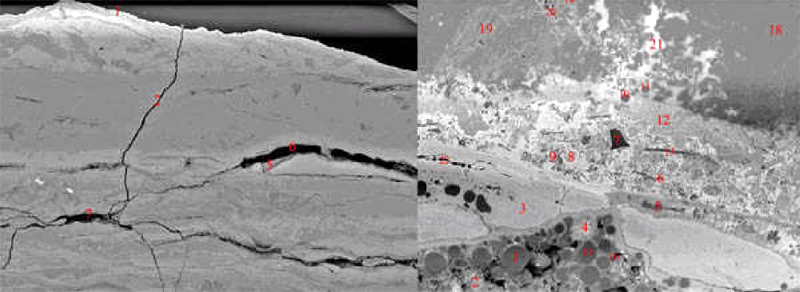
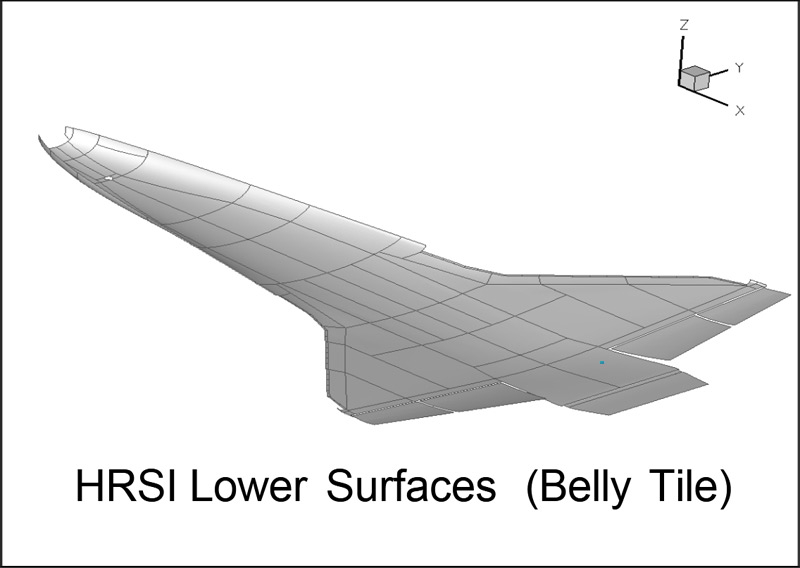
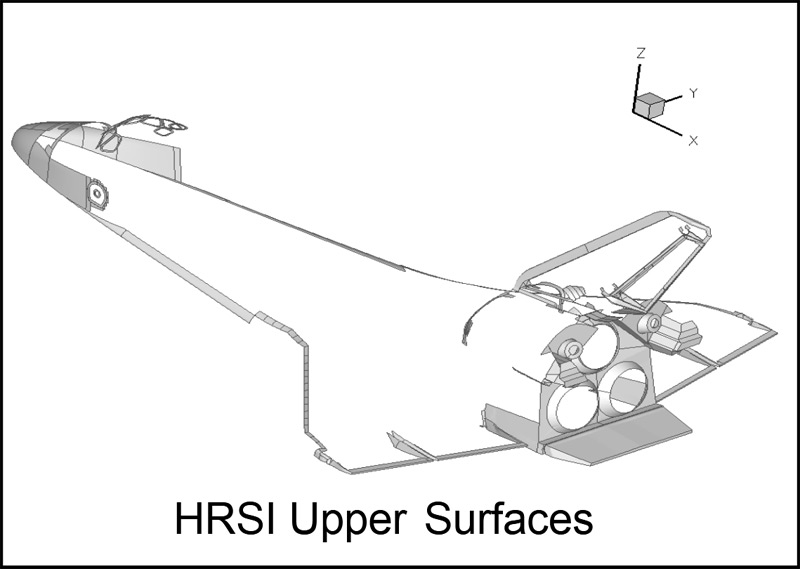
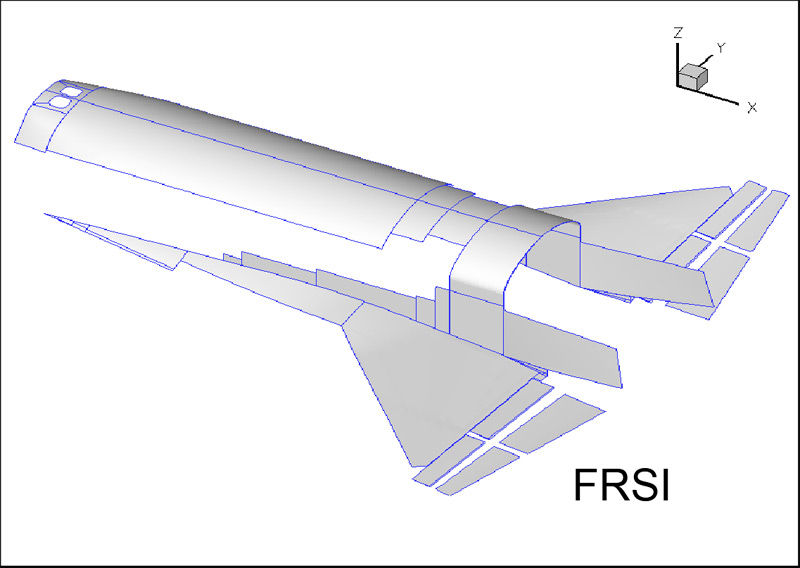
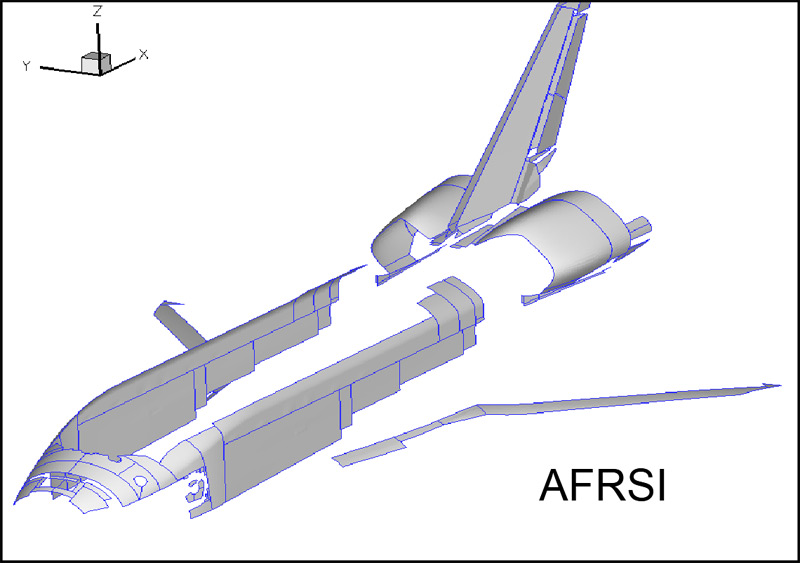
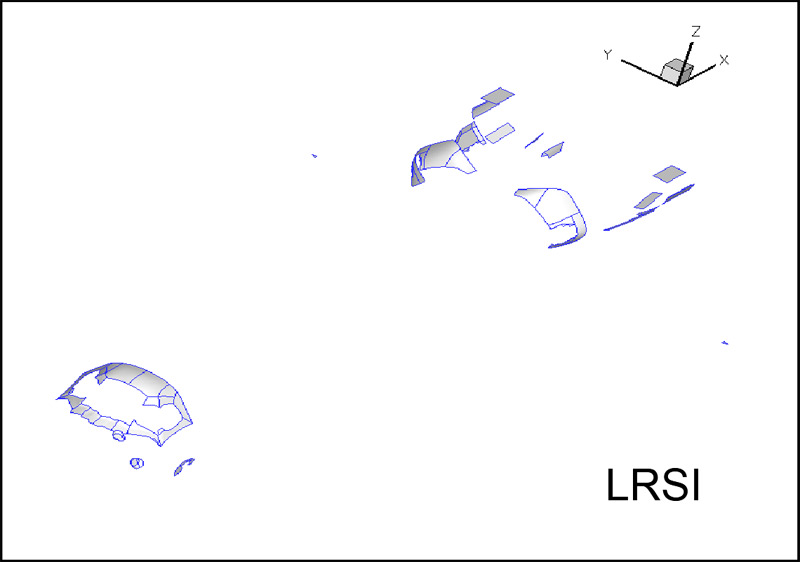
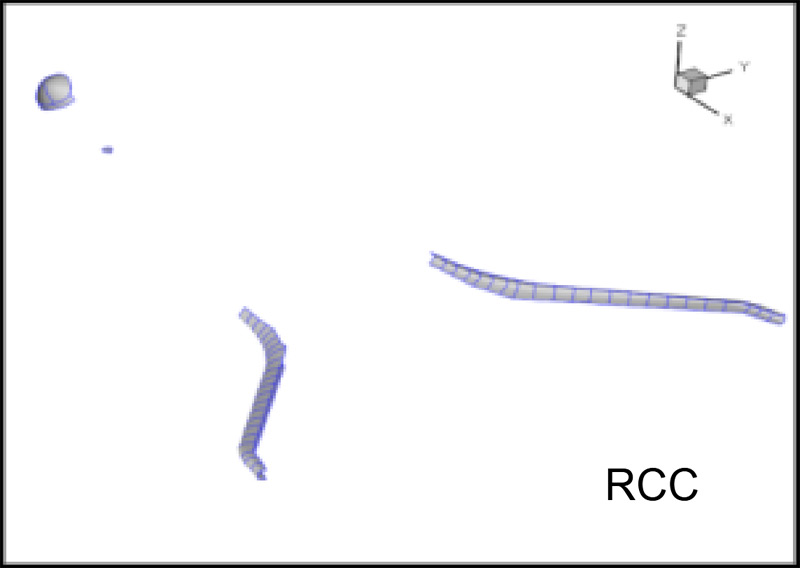
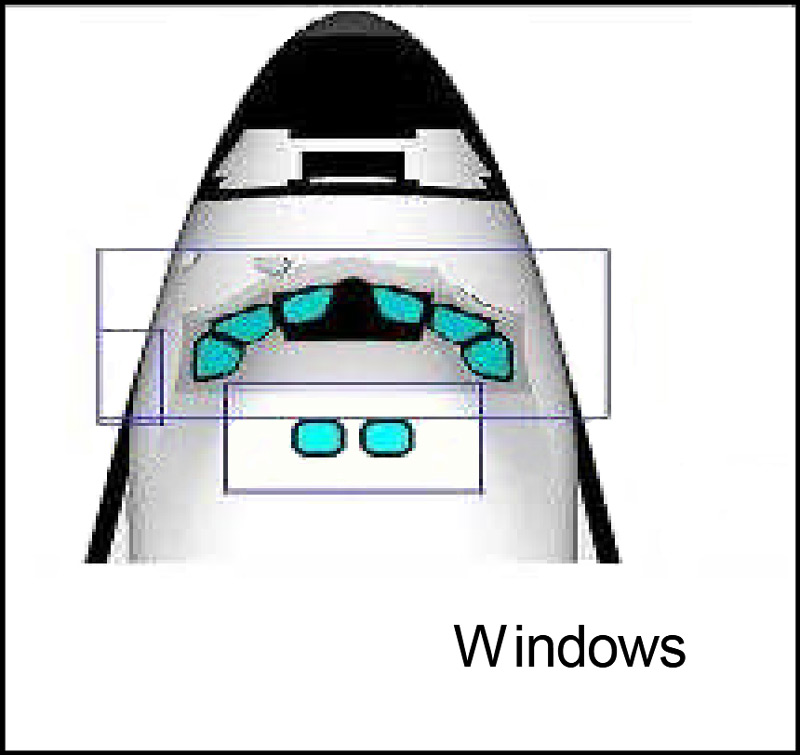
Ten (10) images showing the various tile groups of the Space Shuttle and the regions used for calculating impacts, and risk to the vehicle, along with the external tank and solid rocket boosters (relatively durable by comparison). First is lower surface High-Temperature Reusable Surface Insulation (HRSI), then upper surface HRSI, Felt Reusable Surface Insulation (FRSI), Advanced Flexible Reusable Surface Insulation (AFRSI), Low-temperature Reusable Surface Insulation (LRSI), Reinforced Carbon-Carbon (RCC), and finally the Windows. Afterward, the more durable Space Shuttle Main Engines (SSMEs), the External Tank (ET), and the Solid Rocket Boosters (SRBs).
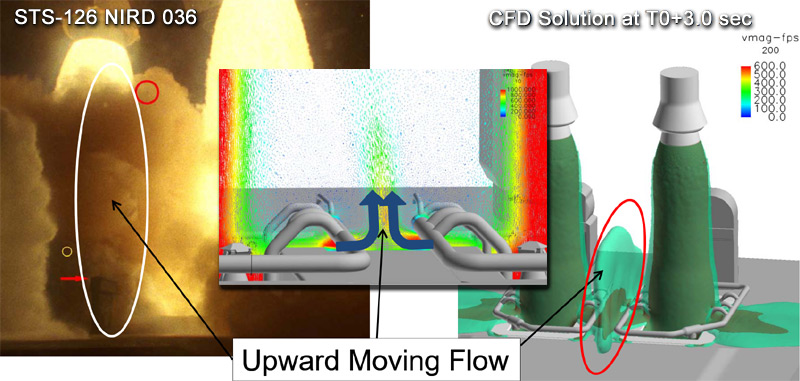
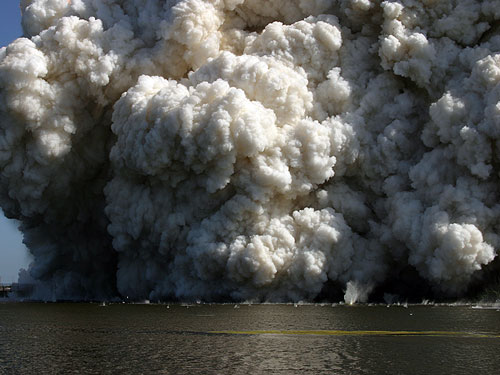
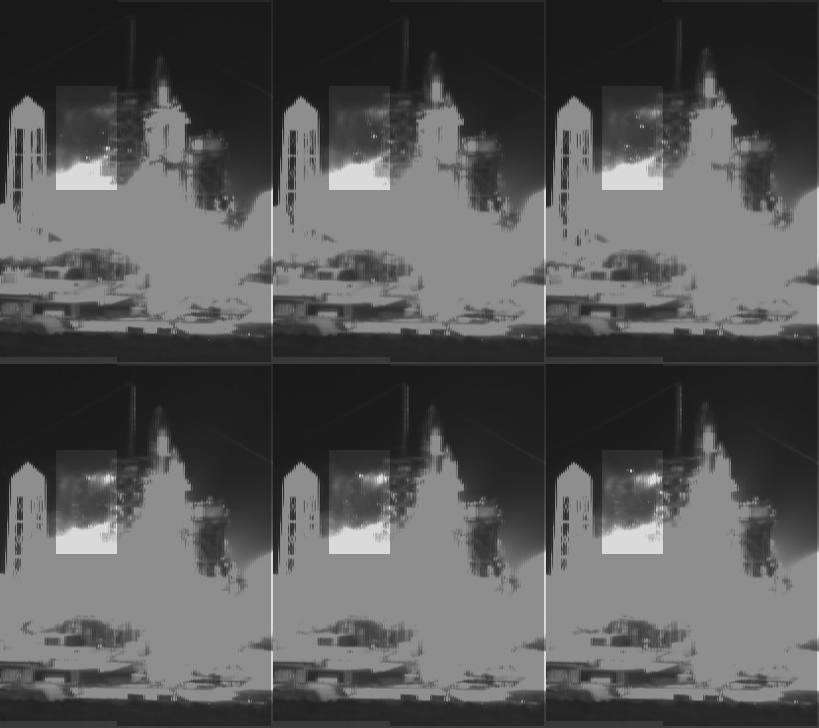
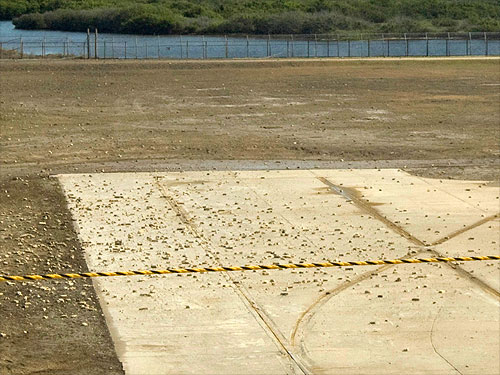
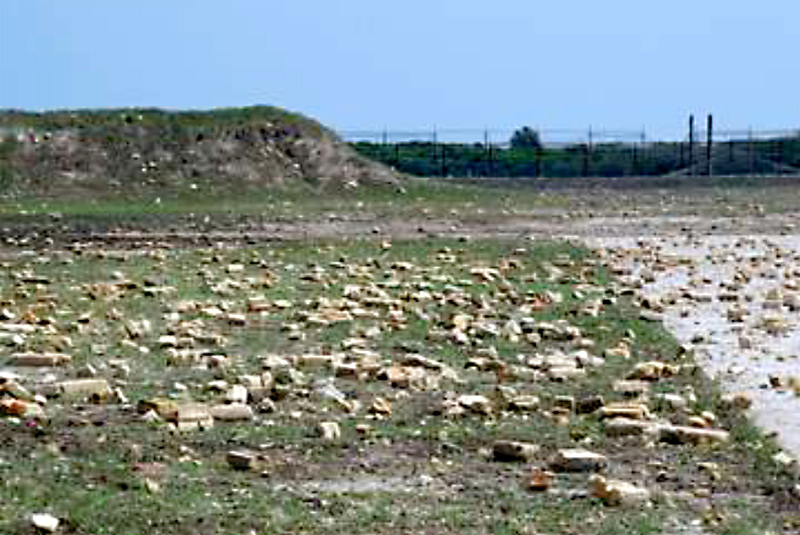
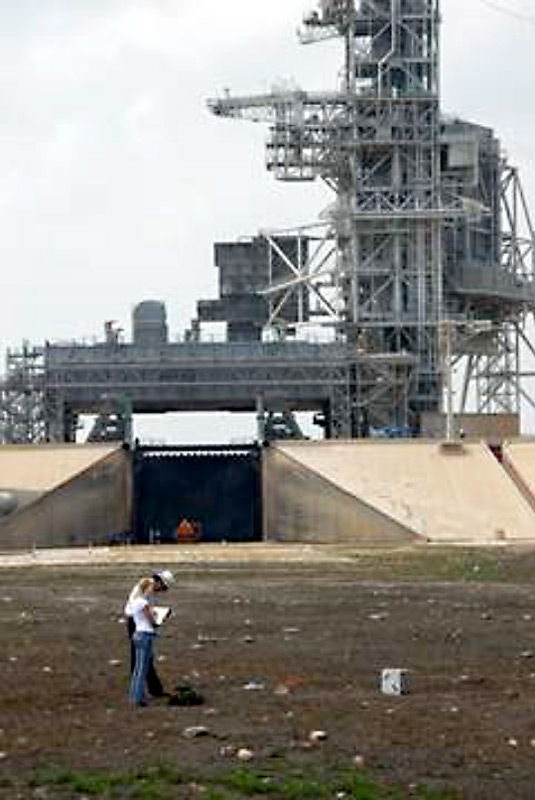
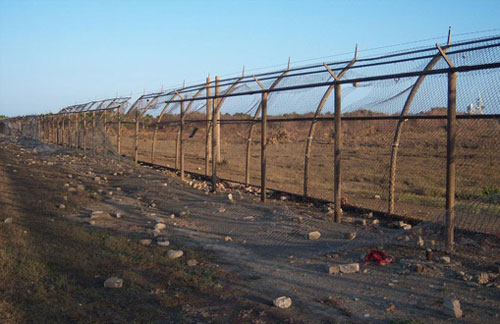
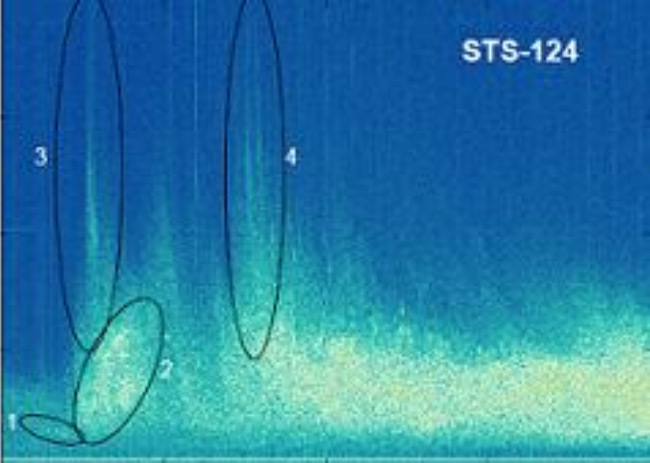
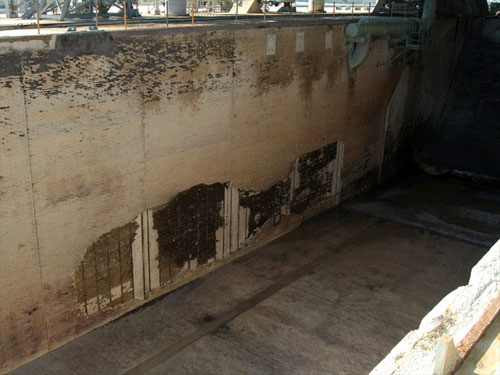
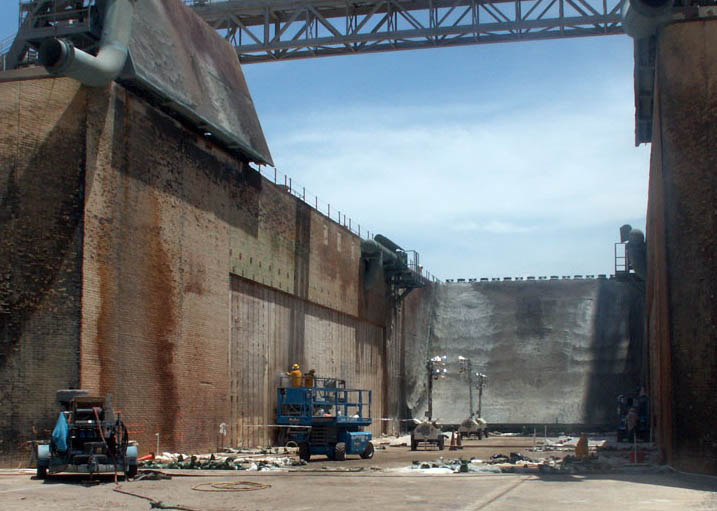
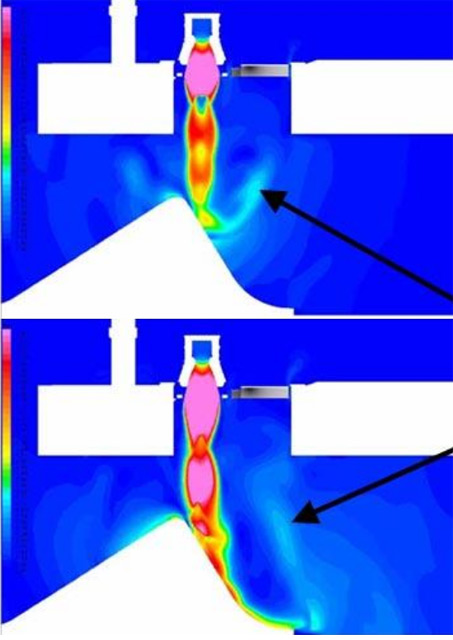
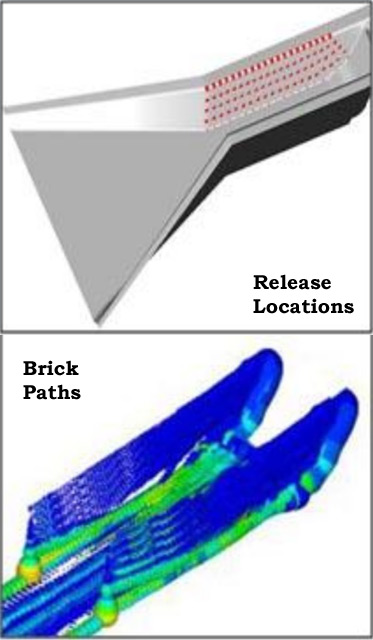
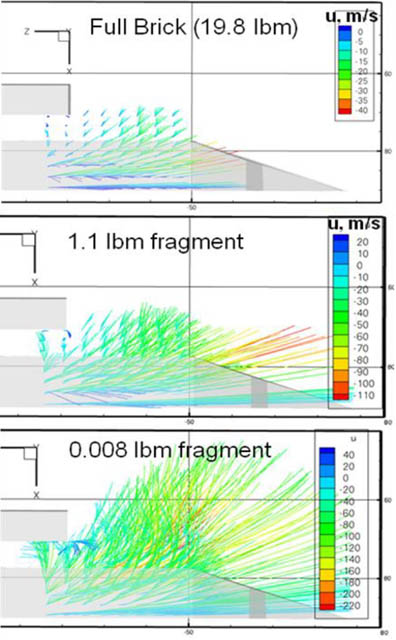
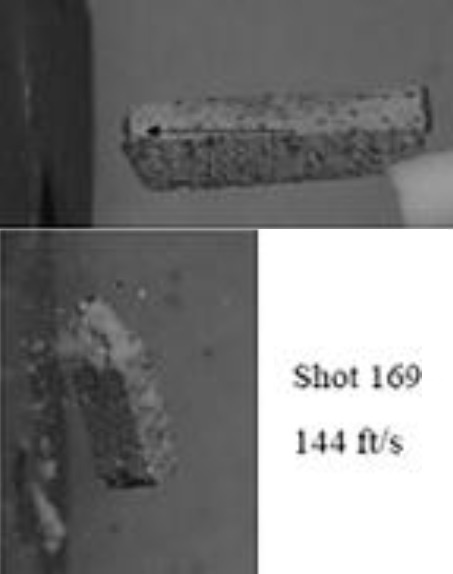
Nine (9) images showing background, and calculations for a major debris event during STS-124 where the flame trench wall liberated sending hundreds of bricks flying out the boundary fence region. Several were visible moving upward near the vehicle in infrared imagery (video). The event set off a several month effort to develop several new CFD models for the specific conditions involved, evaluate the risk to the vehicle, repair the trench, and certify the vehicle for the next flight. The results won our team an Agency level Exceptional Analysis award in 2008.
KSC Launch Pad Flame Trench Environment Assessment, L. M. Calle, P. E. Hintze, C. R. Parlier, J. P. Curran, M. R. Kolody, J. W. Sampson, Kennedy Space Center, Florida, no. NASA/TM-2010-216294, December, 2010
Coherent Flow Structures in the Flame Trench Pressure Environment, C. Brehm, J.A. Housman, M. Barad, E. Sozer, S. Moini-Yekta, C. Kiris, B. Vu, and C. R. Parlier, 21st Thermal & Fluids Analysis Workshop (TFAWS), Kennedy Space Center, Florida, no. ARC-E-DAA-TN10931, July, 2013